
Multi-stakeholder projects fail when teams work from different versions of reality.
Disconnected data creates coordination gaps. Conflicting information causes rework. When five or more companies need to collaborate, you need more than file sharing.
You need a single source of truth.
Table of Contents
Why Projects Need a Single Source of Truth
The cost of disconnected data compounds throughout a project lifecycle.
Fabrication conflicts surface when trades discover their work doesn’t integrate. Install delays cascade when equipment arrives that doesn’t fit. Rework cycles burn budget and schedule when field conflicts emerge during construction.
Here’s a pattern we see repeatedly: equipment arrives on site. It was fabricated to manufacturer specs. Those specs matched approved drawings. But when the rigging crew attempts installation, clearances don’t work. Access paths are blocked. Mounting points conflict with other systems.
The equipment goes back for modification. The schedule slips. The cost escalates.
What happened? Each trade worked from accurate data. But they didn’t work from the same data. Structural drawings showed one configuration. MEP coordination showed another. Equipment submittals referenced a third version. Nobody coordinated against verified field conditions.
That’s the coordination tax. Time wasted reconciling conflicting information. Budget burned resolving preventable conflicts. Schedule lost to rework cycles that could have been avoided.
When projects involve multiple stakeholders across different disciplines, this tax becomes unsustainable.
The Four Requirements
Building a single source of truth requires four foundational elements.
Verified Reality as Foundation
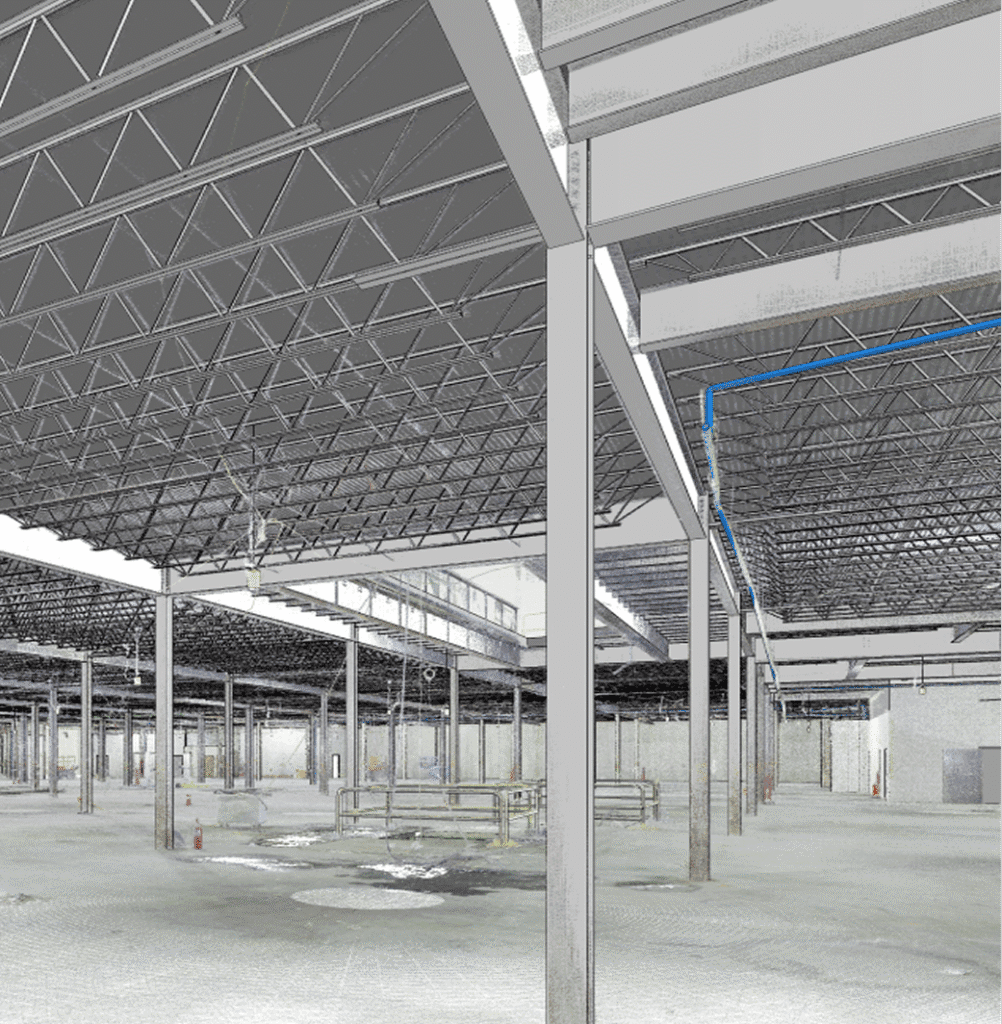
You can’t coordinate what you don’t understand. Reality capture before design establishes the baseline that everything else builds on.
Scan before design decisions get made. Capture accurate as-built conditions. Document existing infrastructure, clearances, and constraints. This verified reality becomes the coordinate system that all trades align to.
When everyone starts from verified conditions instead of assumptions, coordination improves dramatically. Equipment fits because clearances were validated against reality. Routing works because paths were confirmed before fabrication. Install sequences succeed because access was verified upfront.
Centralized Coordination Platform
File sharing creates versioning problems. Email attachments fragment information. When each trade maintains their own files, coordination breaks down.
A centralized coordination platform provides one hub where all teams access current data. Autodesk Construction Cloud, BIM 360, or equivalent platforms create the space where coordination actually happens.
This isn’t about forcing everyone to use the same design software. It’s about creating a unified environment where different tools can coordinate. The structural engineer still works in Revit. The equipment manufacturer still designs in SolidWorks. The conveyor supplier still uses AutoCAD. But they all coordinate in the same platform.
Clear Data Governance
Coordination infrastructure needs rules. Who can edit what. How version control works. What approval workflows look like.
Data governance defines these boundaries. It establishes who’s responsible for maintaining which models. It clarifies when updates need approval. It prevents unauthorized changes from breaking coordination.
Without governance, the platform becomes noise. With it, teams have confidence that the data they’re using is current, accurate, and authorized.
Ongoing Synchronization
Coordination isn’t a one-time event. It’s a continuous process throughout design and construction.
Regular model updates keep information current. Clash detection cycles catch conflicts before they reach the field. As design progresses, coordination evolves. As construction advances, the coordination model stays synchronized with reality.
This ongoing process is what prevents the single source of truth from becoming stale. It’s what keeps teams working from current information instead of outdated assumptions.
Building Your Coordination Infrastructure
Coordination infrastructure follows a sequence. Each step builds on the previous one.
Step 1: Establish BIM Execution Plan
The BIM Execution Plan documents how coordination will actually work.
Standards define how models will be structured. What level of detail is required. How coordinate systems align across different software platforms. What file naming conventions teams will follow.
Workflows outline the sequence. When do models get submitted. How does clash detection happen. What’s the process for resolving conflicts. How do changes get approved.
Responsibilities clarify accountability. Who maintains which models. Who runs coordination meetings. Who resolves clashes when they’re detected. Who validates that issues are actually resolved.
The BEP isn’t theoretical documentation. It’s the operational manual that keeps coordination functioning throughout the project.
Step 2: Configure Coordination Platform
Platform configuration creates the structure that teams will work within.
Set up user roles and permissions. Each company needs access to see coordination status. But not every user needs edit rights to every model. Permissions ensure teams can do their work without accidentally breaking someone else’s coordination.
Establish folder structure that follows the coordination workflow. Organize by discipline, by phase, by approval status. Structure that makes it easy for teams to find current information.
Define naming conventions that make files identifiable across all trades. When someone opens a model, they should immediately understand what it represents, what version it is, and whether it’s approved for coordination.
Step 3: Federate Models from All Trades
Model federation is where coordination becomes visible.
Collect models from all project disciplines. The structural engineer’s Revit model. The MEP contractor’s coordination models. The equipment manufacturer’s SolidWorks assemblies. The steel detailer’s Tekla fabrication drawings.
Align coordinate systems so everything integrates in the same space. Establish the project origin. Define elevation datums. Ensure everyone’s working in the same coordinate system.
Create the unified coordination environment where all trades can see how their work integrates. This federated model becomes the single source of truth. It’s where conflicts get detected. It’s where coordination gets validated. It’s where teams verify that their work actually fits with everyone else’s.
Step 4: Implement Validation Cycles
Validation is what catches problems before they become expensive.
Clash detection identifies conflicts between disciplines. Run it regularly as design progresses. Prioritize issues by impact. Document conflicts with screenshots and affected disciplines. Track resolution through to verification.
Design reviews bring teams together to validate integration. When major systems interact, review coordination before fabrication decisions lock in. Ensure everyone understands how their work affects other trades.
Field verification confirms coordination matches reality. As construction progresses, validate that as-built conditions align with coordination models. When field modifications occur, update the federated model so it remains current.
This validation cycle is what keeps the single source of truth accurate throughout the project.
Common Pitfalls to Avoid
Coordination infrastructure fails when implementation skips critical steps.
Starting Coordination Too Late
The most common failure: starting coordination after fabrication decisions are already made.
When equipment is ordered before coordination happens, changes become expensive. When shop drawings are approved before clash detection runs, conflicts surface in the field. When coordination begins during construction, the cost of resolving issues has already compounded.
Coordination infrastructure needs to be in place before design decisions lock in. That’s when coordination has the most value. That’s when catching conflicts is still manageable.
Unclear Ownership
Someone needs to be responsible for maintaining the single source of truth.
When no one owns coordination, it breaks down. Models fall out of sync. Clashes go unresolved. The platform becomes a file dump instead of a coordination tool.
Clear ownership means someone is accountable for running clash detection, facilitating coordination meetings, tracking issue resolution, and ensuring the federated model stays current.
Inadequate Training
Teams can’t use systems they don’t understand.
When users don’t know how to navigate the platform, they revert to email and file sharing. When they can’t access coordination data, they make decisions based on outdated information. When they don’t understand the workflow, coordination becomes friction instead of value.
Training investment pays for itself. Teams that know how to use the coordination platform actually use it. Teams that understand the workflow follow it. Teams that can access data make better decisions.
Inconsistent Updates
Coordination only works when information stays current.
When one trade updates their model but others don’t, the federated model becomes unreliable. When clash detection runs against outdated information, it misses real conflicts. When teams can’t trust that data is current, they stop relying on the platform.
Consistent update cycles keep coordination synchronized. Regular submission deadlines ensure models stay current. Validation checkpoints confirm updates are complete. The process enforces the discipline that keeps a single source of truth actually truthful.
What Success Looks Like
Projects with effective coordination infrastructure show specific patterns.
Teams make decisions with confidence. They’re working from verified data instead of assumptions. They know their information is current. They trust that what they see in the coordination model reflects reality.
Coordination happens before fabrication. Clashes get detected when they’re still manageable. Equipment gets validated against clearances before it’s ordered. Routing gets confirmed before fabrication begins. The cost of changes stays low because issues surface early.
Problems get caught when they’re manageable, not during install. Field conflicts drop dramatically. Equipment fits the first time. Access paths work as designed. Install sequences happen without surprises.
Project data is structured for handoff. When construction completes, the owner inherits an accurate record. The coordination model becomes the foundation for facility management. The single source of truth transitions from construction coordination to lifecycle management.
That’s the goal. Not perfect coordination—that doesn’t exist. But systematic coordination that catches problems early, keeps teams synchronized, and delivers projects that actually work.
Multi-stakeholder projects need more than file sharing. They need coordination systems that keep teams synchronized.
FAQs
What is a single source of truth in construction?
A single source of truth in construction is a centralized coordination system where all project stakeholders access current, verified data. It typically includes a BIM Execution Plan, federated coordination models, and a platform like Autodesk Construction Cloud where teams coordinate across different software platforms.
What are the four requirements for a single source of truth?
The four requirements are: (1) Verified reality as foundation through reality capture, (2) Centralized coordination platform where all teams access data, (3) Clear data governance defining roles and workflows, and (4) Ongoing synchronization through regular updates and validation cycles.
When should coordination infrastructure be established?
Coordination infrastructure should be established before design decisions lock in and fabrication begins. Starting coordination after equipment is ordered or shop drawings are approved means changes become expensive and conflicts surface in the field instead of during design.
What is a BIM Execution Plan?
A BIM Execution Plan (BEP) documents how coordination will work on a project. It defines standards (model structure, level of detail, coordinate systems), workflows (submission sequence, clash detection, issue resolution), and responsibilities (who maintains models, who runs meetings, who validates resolution).
How does model federation work?
Model federation collects models from all project disciplines (Revit, AutoCAD, SolidWorks, Tekla, etc.), aligns their coordinate systems, and creates a unified environment where teams can see how their work integrates. This federated model becomes the single source of truth for coordination.