
Table of Contents
Traditional facility management typically operates on fixed schedules or responds to failures. HVAC systems receive quarterly service regardless of actual condition. Pumps run until they break. Equipment replacements happen after performance degrades below acceptable levels.
Digital twins with predictive maintenance capabilities offer a different approach. By integrating real-time sensor data, historical performance patterns, and operational analytics, these systems can forecast when equipment may require service before failures occur.
Organizations implementing predictive maintenance are seeing reductions in unplanned downtime, extended equipment life, and more efficient maintenance budget allocation. When the approach works, facility managers can address problems during scheduled windows rather than emergency responses, keeping operations running without disruption.
What a Digital Twin Can Mean for Facility Operations
A digital twin for facility management extends beyond a 3D building model. When fully implemented, it becomes a live operational platform integrating as-built geometry, asset specifications, IoT sensor streams, maintenance history, and performance analytics into one system.
Components of an operational digital twin:
- Geometric foundation: Validated as-built model showing equipment locations, access points, and spatial relationships.
- Asset data: Equipment specifications, warranty information, maintenance requirements, vendor contacts.
- Sensor integration: Real-time monitoring of temperature, vibration, energy consumption, pressure, flow rates.
- Maintenance records: Service history, parts replacements, performance trends, issue documentation.
- Predictive analytics: Machine learning models that forecast failures based on operational patterns and historical data.
When these components connect effectively, sensors can detect abnormal vibration in a pump, the analytics engine compares current readings against historical failure patterns, the system flags the equipment for inspection before breakdown occurs, and the maintenance team accesses the digital twin to review asset specifications, locate the equipment in the facility, and schedule service during the next planned shutdown.
How the Shift from Reactive to Predictive Can Happen
Reactive Maintenance: The Common Starting Point
Many facility operations currently follow reactive or time-based maintenance strategies. Equipment breaks and maintenance teams respond, or systems receive scheduled service at fixed intervals regardless of actual condition.
Challenges with reactive approaches:
- Unplanned downtime can disrupt operations and create emergency service costs.
- Failures sometimes cause secondary damage to connected systems.
- Time-based maintenance may perform unnecessary service on healthy equipment while missing issues that develop between scheduled intervals.
- Limited visibility into equipment health can prevent resource optimization.
Condition-Based Maintenance: An Intermediate Approach
Condition-based maintenance monitors equipment status and triggers service when specific thresholds are exceeded. A motor showing elevated temperature receives attention. A filter with high differential pressure gets replaced.
This approach can improve on reactive maintenance by catching problems earlier, though it remains responsive. Service happens after conditions deteriorate, rather than before.
Digital twins can support condition-based maintenance by centralizing sensor data and automating threshold monitoring. Facility managers see real-time equipment status across the entire portfolio in one interface.
Predictive Maintenance: The Data-Driven Potential
Predictive maintenance uses historical data and machine learning to forecast when failures may occur. The system analyzes patterns across equipment cycles, identifies early warning indicators, and predicts remaining useful life.
In a predictive scenario, a chiller shows normal temperature and pressure readings, but vibration analysis reveals bearing wear patterns that historically precede failure by 30-45 days. The digital twin flags the equipment for scheduled bearing replacement during the next maintenance window.
When this works as intended, it prevents the failure, eliminates emergency service costs, and schedules work when it causes minimum operational disruption. Maintenance becomes planned activity integrated with production schedules rather than unexpected interruption.
What Implementation Typically Requires
Accurate As-Built Foundation
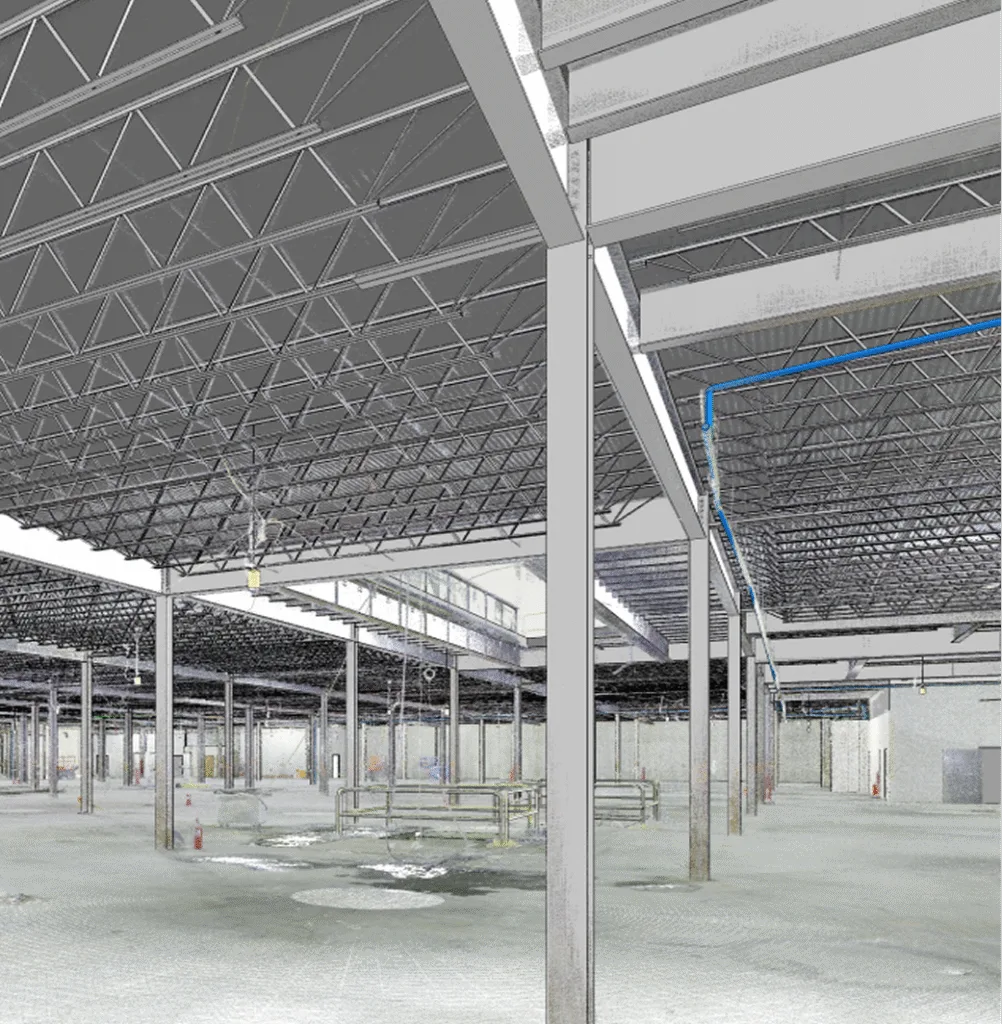
Digital twins benefit from validated as-built geometry as their foundation. Equipment locations, access routes, spatial clearances, and system relationships should accurately represent actual conditions for the system to be most useful.
Reality capture can establish this baseline. Laser scanning documents existing facilities with precision that supports maintenance planning. When done well, technicians can locate equipment without searching, access clearances are verified before ordering replacement components, and the digital twin matches the physical building.
Facilities without accurate as-built documentation often face challenges with digital twin implementation. The time required to manually survey and document assets can reduce the efficiency gains that predictive maintenance offers.
Comprehensive Asset Data
Predictive analytics benefit from complete equipment specifications, maintenance history, and performance baselines. The system works best when it has data about how equipment behaves when healthy and what patterns precede problems.
Asset data structured in COBie format can integrate with digital twin platforms and facility management systems. This standardization helps ensure consistent data structure across equipment types and building portfolios.
Organizations transitioning to digital twin workflows sometimes discover gaps in historical maintenance records. The implementation process often includes data cleanup, standardization, and validation before predictive capabilities become reliable.
IoT Sensor Infrastructure
Real-time monitoring depends on sensors on critical equipment. Temperature, vibration, pressure, flow, and energy consumption measurements feed the digital twin continuously.
Sensor deployment often focuses on equipment where failure creates significant operational or financial impact. Chillers, boilers, production machinery, and critical infrastructure typically receive priority. Non-critical systems may remain on scheduled maintenance until sensor ROI justifies investment.
The sensor network can communicate with the digital twin platform through standard protocols. Integration with building management systems (BMS) and SCADA platforms provides existing data streams without requiring parallel infrastructure.
Analytics and Machine Learning Capability
Predictive maintenance depends on analytics engines that process sensor data, identify patterns, and generate forecasts. These systems require training data from equipment operational cycles and failure events.
Early implementation phases often collect baseline data while operating under condition-based maintenance rules. As the system accumulates operational history, machine learning models can improve prediction accuracy and extend forecast horizons.
Organizations with multiple similar facilities may benefit from shared learning. Analytics trained on equipment performance across a portfolio can generate more accurate predictions than single-building datasets.
Operational Benefits Organizations Are Seeing
Reduced Unplanned Downtime
Organizations implementing predictive maintenance are seeing shifts from unplanned to planned failure events. Some manufacturing facilities report 30-50 percent reduction in emergency maintenance calls. Data centers are maintaining higher uptime percentages. Critical infrastructure is avoiding more service interruptions.
The economic impact varies by industry. A manufacturing line stoppage costs thousands per hour. A data center outage affects revenue and service level agreements. Healthcare facilities face operational challenges when HVAC systems fail in critical areas. Predictive maintenance can help prevent these high-cost disruptions.
Extended Equipment Life
Equipment that receives service based on actual condition rather than fixed schedules may operate longer before replacement. Unnecessary maintenance that introduces contamination or assembly errors can decrease. Components may reach full service life without premature failure.
Capital planning can benefit from more accurate remaining useful life predictions. Organizations schedule replacements during budget cycles rather than emergency procurements. Equipment upgrades coordinate with operational requirements and facility modifications.
Optimized Maintenance Resources
Maintenance teams can focus on equipment that shows signs of requiring attention rather than performing unnecessary service. Parts inventory focuses on components with predicted near-term replacement needs. Contractor scheduling coordinates with forecast maintenance windows.
This resource optimization has the potential to reduce maintenance costs while improving service effectiveness. Technicians spend time on value-adding work. Parts are less likely to expire in storage. Service contracts can align more closely with actual equipment needs.
Data-Driven Decision Making
Digital twins can offer visibility into facility operations that supports strategic decisions. Energy consumption patterns may identify optimization opportunities. Equipment performance data can inform replacement specifications. Maintenance cost analysis helps validate service contract terms.
Facility managers have the opportunity to shift from reactive problem-solving to proactive system optimization. The digital twin becomes a platform for continuous operational improvement.
Where Predictive Maintenance Is Showing Potential Value
Manufacturing and Industrial Operations
Production facilities depend on equipment uptime. Conveyor systems, process machinery, HVAC for environmental control, and compressed air systems all require reliable operation. Predictive maintenance offers the potential to prevent production interruptions and maintain product quality.
Material recovery facilities (MRFs) operate heavy sorting equipment continuously. Predictive maintenance can help schedule repairs during planned downtime rather than mid-shift breakdowns, supporting more consistent throughput and stable revenue.
Healthcare Facilities
Hospitals face operational challenges when HVAC fails in sterile environments, when emergency generators have problems during power outages, or when medical gas systems experience issues. Predictive maintenance can help ensure critical systems maintain reliability standards that patient safety requires.
Digital twins can support compliance documentation by maintaining complete maintenance records with timestamps, technician certifications, and performance validation. Regulatory audits may become simpler when all required data exists in one accessible system.
Commercial Real Estate Portfolios
Organizations managing multiple buildings can benefit from centralized digital twin platforms that monitor equipment across the portfolio. Maintenance teams may identify trends, share solutions, and optimize resource deployment based on predicted service requirements.
Energy management can improve when digital twins track consumption patterns and equipment efficiency. Systems that show declining performance receive attention before energy costs increase significantly. Carbon reduction initiatives gain data visibility for measurement and verification.
Where Predictive Maintenance May Be Heading
Digital twin capabilities continue evolving as sensor costs decrease, analytics improve, and integration becomes simpler.
Near-term developments may include automated parts ordering when equipment reaches predicted maintenance windows, integration with workforce scheduling systems, and enhanced energy optimization through real-time load management.
The technology progression appears to be moving toward more autonomous facility operations where digital twins manage routine maintenance decisions with human oversight for strategic choices. Current systems recommend actions. Future systems may execute approved maintenance strategies with less manual intervention.
Organizations implementing digital twins now are establishing the data infrastructure and operational workflows that could support these advanced capabilities as they mature.
How Accurate As-Built Data Supports Predictive Maintenance
Digital twins benefit from validated as-built foundations. Our laser scanning services document existing facilities with the geometric accuracy that can support operational digital twin implementation.
We capture equipment locations, spatial relationships, and access clearances in formats that integrate with facility management platforms. The scan data becomes the foundation layer that asset information, sensor streams, and maintenance records reference.
Our BIM coordination experience helps teams structure as-built models for operational use. We work with facility teams to define data requirements, validate asset information, and establish model standards that support long-term digital twin maintenance.
Whether your organization is implementing digital twins for new construction or retrofitting existing facilities with predictive maintenance capabilities, we can help establish the accurate as-built documentation that makes these systems more reliable and operationally valuable.
FAQs
What is the difference between predictive and preventive maintenance?
Preventive maintenance follows fixed schedules regardless of equipment condition (quarterly HVAC service, annual inspections). Predictive maintenance uses real-time sensor data and historical patterns to forecast when equipment may require service. Predictive approaches aim to reduce unnecessary maintenance on healthy equipment while catching problems before failures occur.
What data does a digital twin need for predictive maintenance?
Digital twins benefit from validated as-built geometry, comprehensive asset specifications, real-time IoT sensor data (temperature, vibration, pressure, energy consumption), complete maintenance history, and baseline performance data. The system uses this information to identify patterns, detect anomalies, and forecast remaining useful life for critical equipment.
How long does it take to implement predictive maintenance?
Initial implementation often requires 6-12 months for sensor deployment, data integration, and baseline collection. Early phases typically operate under condition-based maintenance rules while analytics engines accumulate training data. Predictive accuracy tends to improve as the system processes equipment operational cycles and develops historical patterns. Organizations with multiple similar facilities may benefit from shared learning across their portfolio.
What ROI can facility managers expect from predictive maintenance?
Some manufacturing facilities report 30-50% reduction in unplanned downtime, 20-40% decrease in maintenance costs, and 10-20% extension of equipment useful life. ROI varies by industry and equipment criticality. High-value systems (production lines, data center infrastructure, critical healthcare equipment) often show faster payback. Implementation costs include sensors, platform licensing, and integration services.
Start the conversation with our team to discuss reality capture, model validation, and the digital foundation that supports operational twins.