
Table of Contents
Clash detection in construction is supposed to save time and money—but too often it does the opposite.
When models are incomplete, coordination starts too late, or trades aren’t aligned, clashes slip through. The result? Field rework, blown budgets, and frustrated project teams.
At OAR, we’ve helped general contractors, project managers, and owners improve their BIM workflows with clash-ready models and structured execution plans. In this guide, we’ll show where clash detection in construction fails—and how to make it work.
Clash Detection Is Run Too Late
The Problem:
Waiting until design is “finished” to start clash detection leaves little room for fixes. Changes at that stage are expensive and delay schedules.
The Fix:
Run clash detection in construction early and often. Contracts should require it at schematic and design development phases, with weekly or bi-weekly reviews baked into the BIM Execution Plan.
Models Are Incomplete or Inaccurate
The Problem:
Clash detection in construction is only as good as the models. If geometry is outdated or placeholder-level, key conflicts won’t be flagged.
The Fix:
Enforce LOD (Level of Development) standards in your BIM Execution Plan and contracts. Ensure all trades provide detailed, constructible models—or use a partner like OAR to fill gaps.
Field Conditions Aren’t Captured
The Problem:
Clashes often happen in retrofits or additions because the design model doesn’t match reality. Walls, beams, and MEP elements are often off from the original drawings.
The Fix:
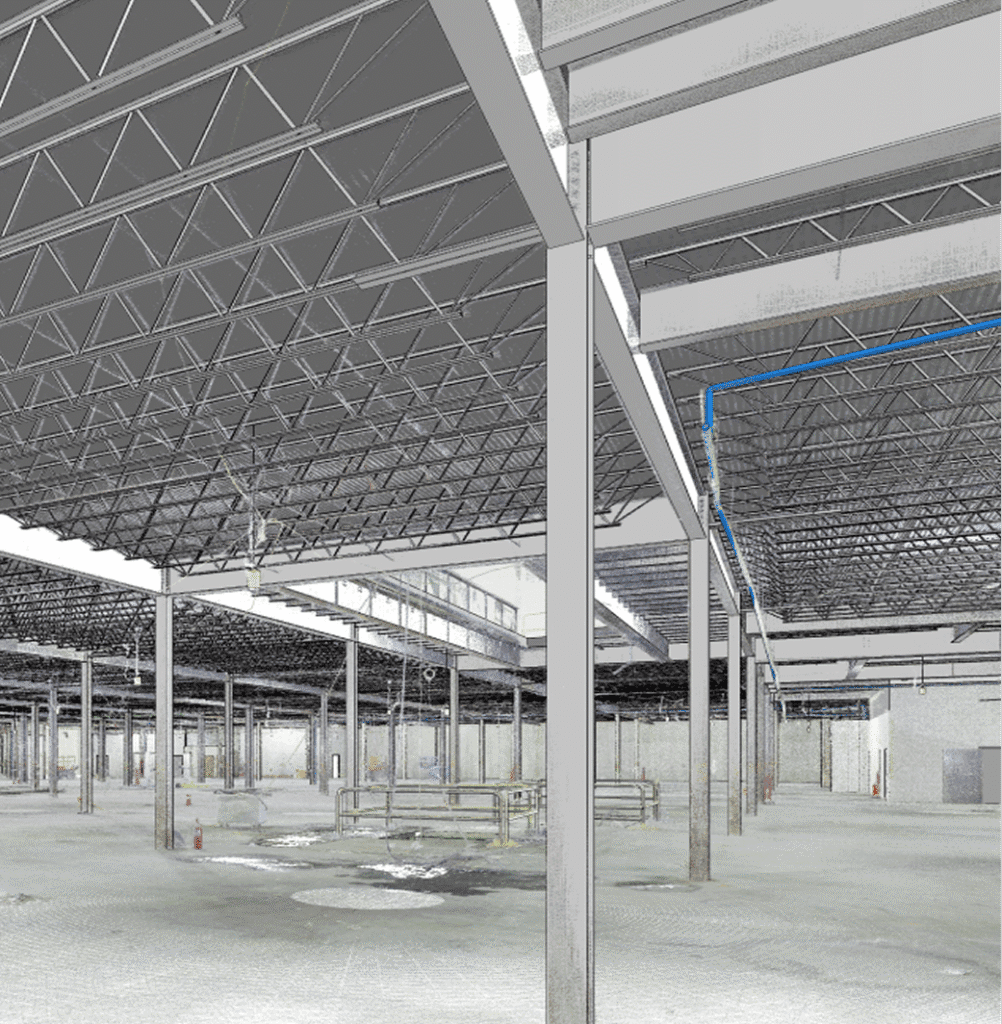
Use laser scanning to capture as-built conditions. Point clouds make clash detection in construction more reliable by ensuring models reflect what’s actually in the field.
No Ownership of Clash Resolution
The Problem:
Generating clash reports is easy. Tracking and resolving them is where workflows fail. Unassigned clashes pile up and stall coordination.
The Fix:
Assign clash resolution by trade in your CDE or Navisworks. Treat them like RFIs—with deadlines, comments, and clear responsibility outlined in your execution plan.
Trades Aren’t Brought in Early Enough
The Problem:
If subcontractors join late, their shop drawings rarely align with the coordinated model. The result? Redesigns, delays, and finger-pointing.
The Fix:
Bring trades into BIM coordination early. Require their 3D models and participation in clash detection in construction through contractual BIM Execution Plan language.
Clash Review Is Disorganized
The Problem:
Reviewing hundreds of clashes without priorities leads to wasted time and overlooked issues.
The Fix:
Standardize clash review protocols. Define meeting frequency, severity rankings, and reporting formats in your BIM Execution Plan. Focus first on hard clashes, then clearances and soft clashes.
Technology Adoption Is Weak
The Problem:
Even when contractors invest in tools like Navisworks, BIM 360, or Revizto, many team members still rely on 2D drawings, undermining model-based coordination.
The Fix:
Offer BIM training and use visualization tools—like clash snapshots or flythroughs—to make clash detection in construction accessible for all stakeholders.
Conclusion: Make Clash Detection in Construction Work for You
Clash detection in construction is only effective when contracts, models, and workflows align. Without clear BIM Execution Plan requirements—covering clash protocols, LOD standards, meeting frequency, and software use—coordination quickly falls apart.
At OAR, we deliver verified as-built scans, BIM models, and structured clash detection workflows that keep projects coordinated from day one.
FAQs
What is clash detection in construction?
It’s the process of identifying conflicts between building systems—like ductwork and structural beams—before construction begins.
When should clash detection start?
As early as schematic design. Early detection allows more flexibility to resolve issues.
Should BIM requirements be written into contracts?
Yes. A BIM Execution Plan and contract language should mandate clash detection protocols, trade participation, and review frequency.
What tools help with clash detection?
Navisworks, BIM 360, and Cintoo (for point cloud overlays) are powerful solutions.
Can OAR help mid-project?
Absolutely. We can scan your site, validate models, and step into your workflow to get coordination back on track.