Construction risk management often focuses on schedules, contingencies, and buffers—but these are usually symptoms of deeper uncertainty, not solutions.
Construction uncertainty doesn’t usually announce itself.
It shows up quietly—in contingency plans, padded schedules, conservative assumptions, and decisions made “just to keep things moving.” Over time, those small uncertainties compound into delays, rework, and cost overruns.
Technology is often positioned as the solution. But technology alone doesn’t reduce uncertainty.
How it’s used does.
Table of Contents
What Construction Uncertainty Looks Like in Practice
Uncertainty isn’t a lack of effort. It’s a lack of clarity.
On real projects, it shows up as:
- Planning around drawings that may not reflect current conditions
- Design decisions made without full visibility into access or clearances
- Shutdown schedules built on assumptions rather than verified constraints
- Coordination meetings spent debating what might be in the field
Teams don’t ignore uncertainty—they work around it. But working around uncertainty is not the same as reducing it.
Why Technology Alone Isn’t Enough
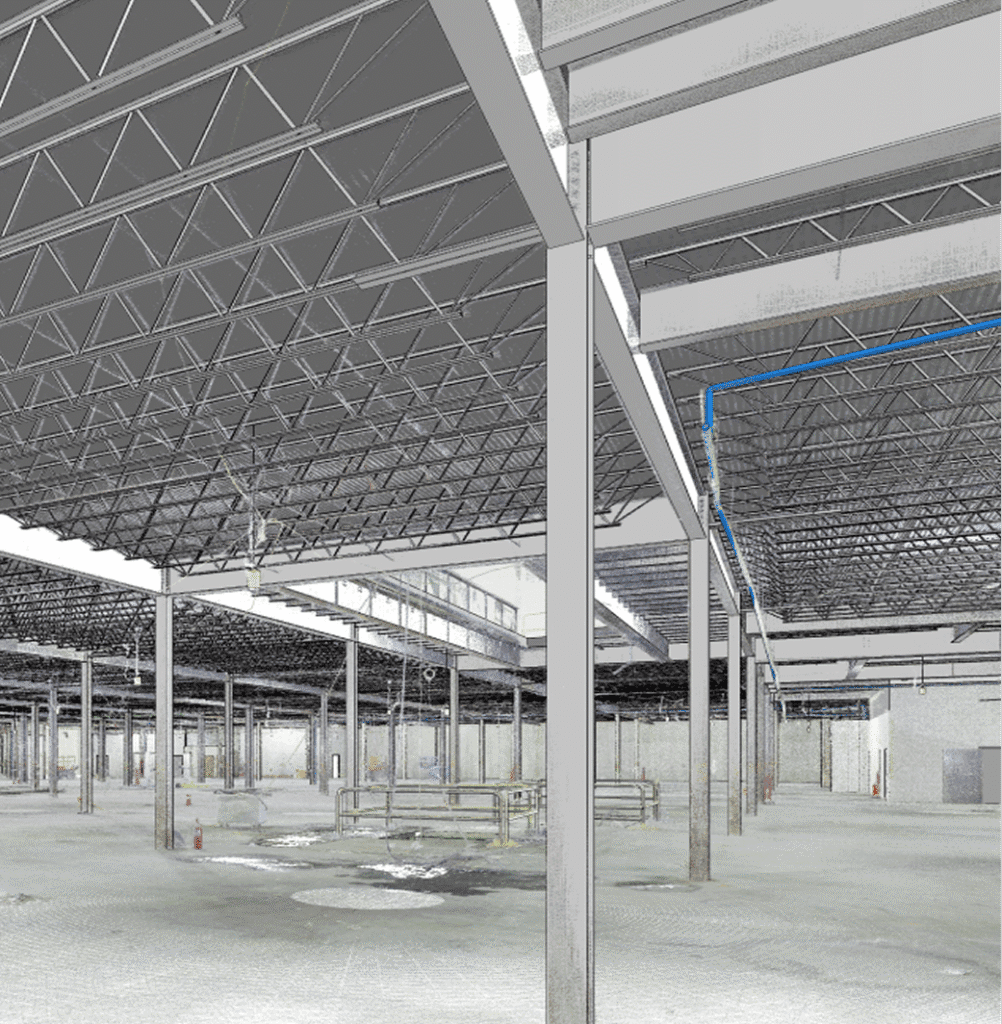
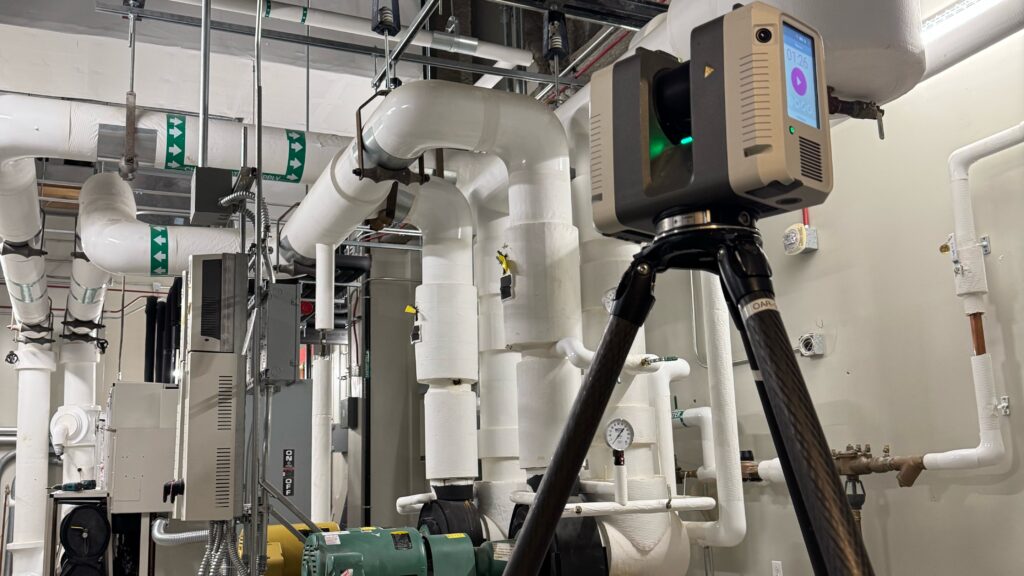
Modern construction technology is capable of producing highly accurate information. Reality capture, models, and digital representations can provide a level of detail that wasn’t possible years ago.
Yet many projects still struggle with the same issues.
The reason is simple: technology creates value only when teams trust it and use it to make decisions.
A highly detailed model that sits unused—or is treated as a reference instead of a planning tool—doesn’t reduce uncertainty. It just adds another file to manage.
Adoption Is Where Value Is Created
The difference between projects that benefit from technology and those that don’t is rarely the tools themselves. It’s Applying it.
Technology reduces uncertainty when:
- Teams rely on it during planning—not just after issues arise
- Information arrives early enough to influence decisions
- The level of detail matches the decisions being made
- Stakeholders understand how to use it in their workflows
When adoption is weak, teams fall back on assumptions—even when better information exists.
Where Technology Has the Biggest Impact
Not all uncertainty is equal. High-performing teams use technology strategically, focusing on areas where uncertainty carries the greatest risk.
That typically includes:
- Congested zones with multiple systems
- Interfaces between trades
- Areas with limited access or tight tolerances
- Spaces that will be difficult to modify once work begins
By targeting these areas, teams reduce uncertainty where it matters most—without overloading the project with unnecessary detail.
Technology as a Decision System, Not a Deliverable
One of the most common mistakes teams make is treating construction technology outputs as deliverables instead of decision-support systems.
When technology is framed as a handoff—“here’s the model”—its value is limited. When it’s framed as a shared input for planning, coordination, and sequencing and the foundation of virtual construction planning, uncertainty drops significantly.
Used correctly, technology helps teams:
- See constraints earlier
- Compare options with confidence
- Align stakeholders around shared facts
- Make decisions before pressure sets in
That’s where uncertainty is replaced with clarity.
Driving Adoption in the Real World
Adoption doesn’t happen automatically. It has to be intentional.
Teams that succeed tend to:
- Introduce verified information early, before decisions are locked
- Focus on practical use cases rather than theoretical value
- Train teams to rely on the information—not work around it
- Reinforce trust by showing how decisions improve when uncertainty is removed
When teams see immediate, practical benefits, adoption follows.
The Cost of Treating Uncertainty as “Normal”
Uncertainty is often accepted as part of construction. But normalization doesn’t make it harmless.
Unchecked uncertainty leads to:
- Conservative decisions that limit efficiency
- Late discoveries that force redesign
- Extended shutdowns
- Increased risk exposure across cost, schedule, and safety
Reducing uncertainty isn’t about eliminating risk entirely. It’s about understanding it well enough to manage it proactively.
The Strategic Takeaway
Construction Technology plays a critical role in reducing uncertainty—but only when it’s used to support real decisions.
The projects that perform best aren’t the ones with the most advanced tools. They’re the ones where teams trust their information, adopt it early, and use it consistently to guide planning and coordination.
In complex construction environments, certainty isn’t created by technology alone.
It’s created when verified reality becomes the foundation for decision-making.
Replacing Assumptions With Verified Reality
OAR supports complex construction and retrofit projects by helping teams replace assumptions with verified existing conditions. That clarity allows better planning, stronger coordination, and decisions made before pressure sets in—not after.