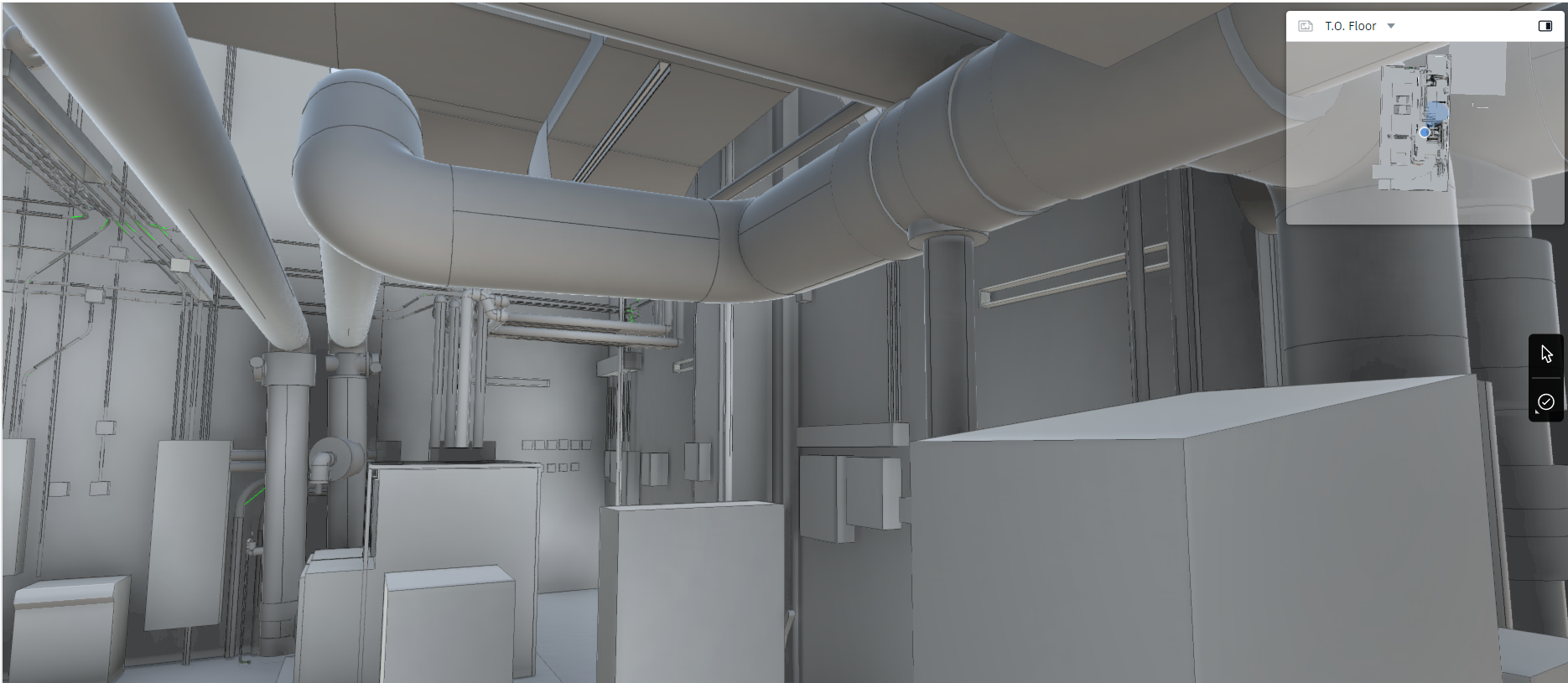
In industrial facilities, coordination isn’t about convenience. It’s about survival.
Every hour of unplanned downtime compounds. Shutdown windows are fixed. Equipment arrives on tight schedules. A single coordination failure can extend a shutdown by days and cost millions.
This is how industrial coordination works when the stakes are this high.
Table of Contents
Why Industrial Coordination Is Different
Industrial projects operate under constraints that don’t exist in typical construction.
Fixed Shutdown Windows
Production can’t wait. When a materials recovery facility shuts down for equipment installation, every day offline means lost revenue. When a power generation plant goes offline for maintenance, capacity disappears from the grid. When a manufacturing facility pauses for upgrades, customers still expect deliveries.
Shutdown windows are negotiated months in advance. Stakeholders align schedules. Contracts specify completion dates. Revenue projections account for the downtime.
That window doesn’t extend just because coordination failed. If equipment doesn’t fit, you fix it during the shutdown. If routing conflicts emerge, you resolve them in real time. The facility restarts on schedule regardless of what went wrong.
Equipment Complexity
Industrial equipment isn’t standard catalog items. It’s custom fabrication with long lead times and precise fit requirements.
A sorting system for a recycling facility. A turbine assembly for a power plant. A processing line for a chemical facility. These systems are engineered specifically for their installation location. They’re fabricated months before install. Changes after fabrication aren’t minor adjustments—they’re major rework.
When that equipment arrives and doesn’t fit, your options are limited. Modify the equipment in the field. Modify the facility to accommodate the mismatch. Or delay startup while equipment goes back for refabrication.
None of those options are good. All of them are expensive. The best option is coordination that prevents the mismatch in the first place.
Multi-Trade Density
Industrial facilities pack multiple building systems into constrained spaces.
MEP systems route through areas where clearances are measured in inches. Structural supports integrate with process equipment. Conveyors thread between existing infrastructure. Controls and power distribution layer on top of everything else.
Every trade needs space. But space is limited. When coordination fails, conflicts compound. One routing issue cascades into adjacent systems. Access path problems affect multiple disciplines. Equipment that doesn’t fit blocks work for everyone downstream.
In that environment, coordination isn’t just about preventing clashes. It’s about sequencing work so trades can actually execute without blocking each other.
Zero Tolerance for Field Conflicts
Typical construction projects have contingency. When conflicts surface, schedules adjust. When equipment doesn’t fit, work slows while solutions get engineered. When coordination gaps emerge, teams improvise.
Industrial shutdowns don’t have that luxury. The facility restarts on the scheduled date. Period. There’s no contingency for coordination failures. There’s no schedule float for rework.
That reality changes how coordination works. It moves from best practice to absolute requirement. It shifts from catching most conflicts to catching all conflicts. It transforms from coordination for efficiency to coordination for survival.
The Pre-Shutdown Coordination Sequence
Industrial coordination follows a systematic sequence. Each phase builds confidence that installation will execute without surprises.
Phase 1: Baseline Reality Capture
Coordination starts with understanding what actually exists.
Scan existing conditions before any design begins. Document as-built infrastructure in precise detail. Verify clearances that drawings show but field conditions may not support. Capture routing paths that equipment will follow during installation.
Industrial facilities evolve over decades. Modifications accumulate. Upgrades layer on top of original systems. Documentation drifts from reality. What drawings show and what actually exists can be dramatically different.
Reality capture establishes the baseline. It documents current conditions with precision. It identifies conflicts between legacy drawings and field reality. It creates the verified foundation that all coordination builds on.
Phase 2: Design Coordination
With verified reality as the baseline, design coordination validates integration before fabrication begins.
Federate models from all trades. The structural engineer’s modifications. The equipment manufacturer’s assemblies. The MEP contractor’s routing. The controls integrator’s systems. Collect everything into a unified coordination environment.
Run clash detection before fabrication decisions lock in. Identify conflicts while changes are still manageable. Prioritize issues by impact on schedule and cost. Resolve clashes through design adjustments instead of field modifications.
Validate that equipment fits within verified clearances. Confirm access paths accommodate rigging requirements. Verify that routing doesn’t conflict with existing infrastructure. Check that mounting points align across disciplines.
This validation happens iteratively. As design progresses, coordination cycles catch emerging conflicts. By the time fabrication begins, integration has been validated against verified conditions.
Phase 3: Pre-Fabrication Validation
Just before equipment orders and shop drawings lock in, a final validation confirms everything actually works.
Review coordinated models against verified field conditions one more time. Confirm dimensions match reality, not assumptions. Validate install sequences account for actual site constraints. Identify any last potential conflicts before fabrication begins.
This checkpoint catches issues that emerged during final design. It validates that coordination kept pace with design evolution. It creates confidence that equipment being fabricated will actually fit when it arrives.
Once fabrication begins, changes become expensive. This validation happens while adjustments are still reasonable.
Phase 4: Shutdown Planning
With coordination validated, shutdown planning sequences the actual work.
Determine equipment staging locations. Plan rigging paths based on coordinated clearances. Sequence trades so work flows without bottlenecks. Identify dependencies where one task must complete before another begins.
Create contingency plans for likely issues. If equipment arrives damaged, what’s the backup plan. If access is blocked, what’s the alternate path. If a system doesn’t start, what’s the troubleshooting sequence.
This planning happens before the shutdown begins. It ensures teams know exactly what to do when they arrive on site. It minimizes improvisation during the critical window when every hour costs money.
Common Industrial Coordination Failures
Certain patterns create predictable failures in industrial coordination.
Legacy Drawings Don’t Match Field Reality
The most common failure: trusting documentation that’s decades out of date.
Industrial facilities modify continuously. A pipe gets rerouted. A support gets added. An equipment mounting gets adjusted. Those changes happen in the field. They don’t always make it back to the drawings.
Years later, a major project starts. Design happens based on existing drawings. Equipment gets fabricated to those specs. The shutdown begins. And field conditions don’t match documentation.
Reality capture prevents this failure. Scan before design. Coordinate against verified conditions, not legacy drawings. Build confidence that what you’re designing actually fits what exists.
Equipment Doesn’t Fit Through Access Paths
The second pattern: coordination validates final position but ignores how equipment gets there.
Equipment fits perfectly in its installed location. Clearances work. Mounting points align. Integration is validated. But nobody verified the rigging path.
Equipment arrives. Rigging crew mobilizes. And they can’t get the assembly through doorways. Can’t navigate corridors. Can’t clear overhead obstructions. The equipment is too large for the access path.
Now you’re modifying the facility to accommodate rigging. Removing temporary barriers. Cutting openings. Creating paths that weren’t planned. All during the shutdown window when every hour counts.
Coordination needs to validate the journey, not just the destination. Model the rigging sequence. Verify clearances along the entire path. Confirm equipment can actually reach its installation location.
MEP Routing Conflicts Discovered During Install
The third failure: trades coordinating in isolation instead of against a unified model.
Each discipline coordinates internally. Electrical routing looks good in the electrical model. HVAC ductwork clears in the mechanical model. Plumbing fits in the plumbing coordination. Everything looks fine.
Then installation begins. And electrical conduit conflicts with ductwork. Plumbing blocks control panel access. Structural supports interfere with equipment clearances. None of these conflicts showed up because nobody coordinated across disciplines.
Federated coordination prevents this. Collect all trade models in one space. Run clash detection across disciplines. Validate integration before installation begins. Don’t let trades coordinate in silos when they need to work in the same space.
Shutdown Extends Because of Field Conflicts
The ultimate failure: reaching the restart date with work still incomplete.
Equipment didn’t fit. Routing conflicts emerged. Access issues delayed critical tasks. Sequencing broke down. Dependencies weren’t validated. The shutdown that was supposed to complete in two weeks hits week three with major work remaining.
Every additional day costs revenue. Contract penalties trigger. Stakeholder pressure intensifies. Teams work around the clock trying to recover schedule. The facility finally restarts, but the financial impact is severe.
Pre-shutdown coordination prevents this outcome. It catches problems before mobilization. It validates installation sequences before the shutdown begins. It creates confidence that work will complete within the scheduled window.
The Data Foundation That Enables Confidence
Industrial coordination succeeds when it’s built on verified reality.
1. Verified Reality as Starting Point
Scan before any design decisions. Capture existing conditions with precision that drawings can’t match. Document infrastructure that’s evolved over decades. Create the baseline that coordination builds on.
This isn’t optional. It’s the foundation. Without verified reality, you’re coordinating against assumptions. With it, you’re coordinating against truth.
2. Accurate Equipment Models
Manufacturer data needs validation against field conditions. Equipment specs need verification against installation constraints. Assembly dimensions need confirmation against access paths.
Don’t trust catalog data without validation. Don’t assume submittals match actual fabrication. Verify that what’s being built matches what was coordinated.
3. Coordinated Routing
All trades working from a federated model. Electrical seeing mechanical. Plumbing seeing structural. Controls seeing process equipment. Everyone coordinating in the same space.
This coordination catches conflicts before installation. It validates integration across disciplines. It creates confidence that routing actually works when installation begins.
4. Validated Install Sequences
Access paths confirmed against equipment dimensions. Rigging sequences modeled before mobilization. Trade dependencies validated before scheduling. Contingencies planned for probable issues.
This validation transforms coordination from theoretical to executable. It proves work can happen in the sequence planned. It identifies bottlenecks before they emerge on site.
Case Pattern: Materials Recovery Facility Coordination
A recent materials recovery facility project demonstrates what industrial coordination looks like at scale.
The project involved multiple stakeholders. Equipment manufacturers. Structural engineers. MEP contractors. Controls integrators. All working across different software platforms. Revit, AutoCAD, SolidWorks, Tekla. Multiple platforms. Multiple disciplines. One shutdown window.
The coordination infrastructure started with a BIM Execution Plan. Project-specific standards. Clear workflows. Defined responsibilities. Everyone understood how coordination would work before design began.
An Autodesk Construction Cloud workspace became the coordination hub. Configured with proper roles, permissions, and structure. All stakeholders accessed current coordination data in one place.
Models from all trades were federated into a unified environment. Coordinate systems aligned. Naming conventions established. Integration visible across all disciplines.
Initial clash detection identified 101 conflicts. None of them reached the field. All resolved during design through systematic coordination cycles. By the time fabrication began, integration was validated.
The owner had real-time visibility into coordination status. Training sessions equipped their team to navigate the platform. Mobile field access allowed validation during site visits. They could compare field conditions against coordinated models in real time.
When the shutdown began, work executed without coordination surprises. Equipment fit. Routing worked. Access paths validated. Installation completed within the scheduled window.
That’s what turnkey industrial coordination delivers. Not just accurate data, but coordination systems that actually work under shutdown constraints.
Industrial facilities need coordination that accounts for fixed windows, equipment complexity, and zero tolerance for field conflicts.