
Table of Contents
Retrofit projects—whether modernizing commercial facilities or upgrading legacy systems— are greatly improved by accurate plans of existing structures and systems. Unlike new construction, the challenge lies in adapting to what’s already built and planning to integrate into those existing conditions
That’s where accurate reality capture comes in. Using tools like 3D laser scanning and photogrammetry, OAR delivers precise digital models that drive smarter decisions, constructable designs, and Faster facility commissioning.
Comprehensive Insight into Existing Conditions
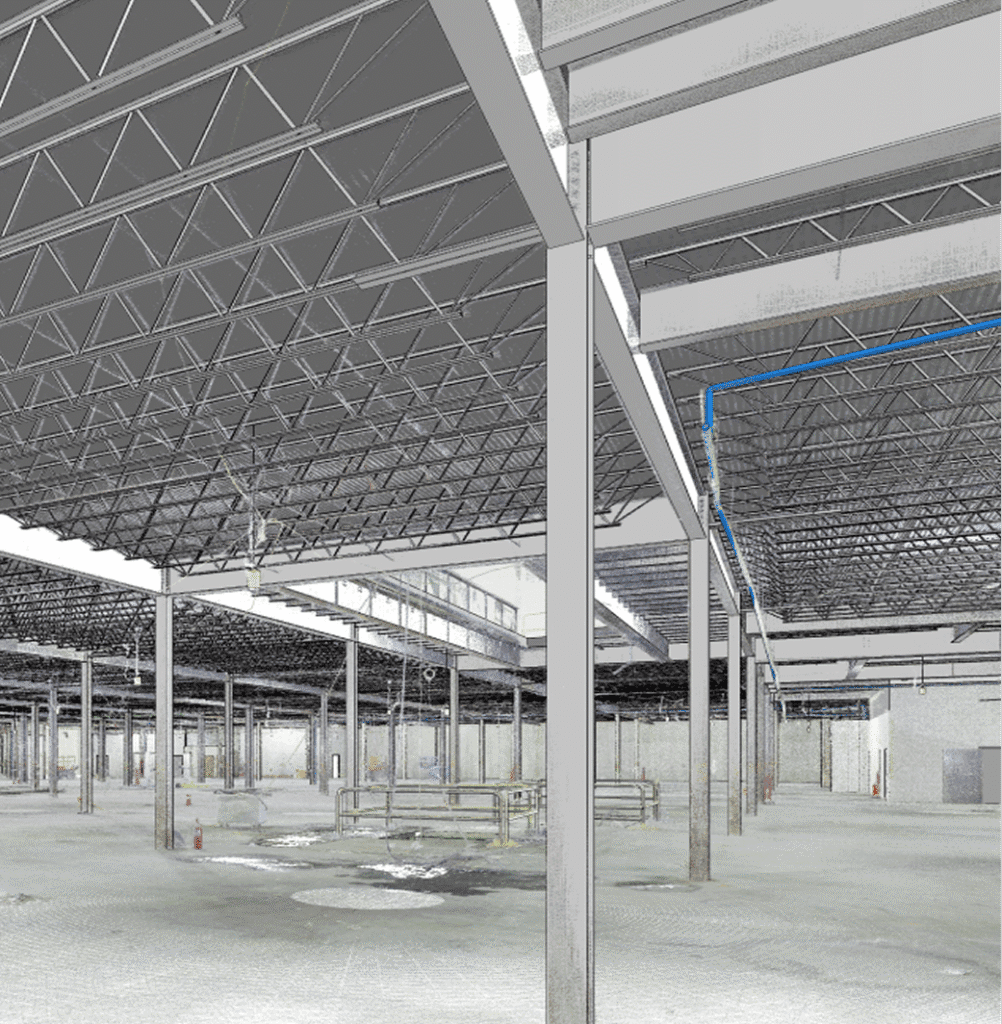
Reality capture technologies provide exact digital twins of existing environments, capturing every dimension and surface detail. This precision is especially valuable in retrofits, where conditions can be irregular or undocumented.
Case in point: The renowned Woolworth Building renovation used phased BIM models generated from laser scan data to preserve the architectural integrity of the historic façade during modernization—proof that accurate capture supports both creativity and compliance.
Key Takeaway:
Better data upfront means fewer surprises later.
Higher Design Accuracy with Clash Detection
Integrating precise spatial data from site reality capture into BIM platforms allows design teams to overlay new elements onto existing conditions with millimeter-level precision. This supports clash detection and resolution well before construction begins. But without accurate reality capture to obtain site data, clashes between existing conditions and conceptual design often get overlooked and result in time consuming RFIs, costly delays, idle crews onsite, and longer times to facility commissioning and operations… the costs are tremendously high when considering that each issue delays time to production.
According to Autodesk, firms incorporating accurate reality capture experience significant reductions in rework and delays—a direct result of designing with confidence and foresight.
Key Benefits:
- Resolves design conflicts early
- Minimizes change orders
- Protects timelines and budgets
Stronger Collaboration Across Stakeholders
With a common digital reference provided by a project owner that hired an independent accurate reality capture firm (like OAR) early in the process, project stakeholders—from architects and engineers to contractors and owners—can align around a single, accurate view of the existing structure. At OAR, we often take responsibility for storing and distributing site data to all relevant project partners and the project owner’s behest. This reduces site visits, accelerates bids and planning, and often results in more competitive bids because the data reduces contractor risk.
This shared reality fosters better communication, reduces assumptions, and builds trust across the team. Everyone sees the same thing, can communicate about issues inside of a common data enviornment tied to the site data, and makes decisions based on accurate data and plans.
Key Benefits:
- Enhances transparency
- Streamlines coordination
- Reduces scope creep and confusion
Streamlined Planning and Execution
Accurate reality capture simplifies construction sequencing and logistics by providing a clear visual and spatial roadmap. When teams know what they’re working with in advance, they can schedule activities more accurately and allocate resources efficiently.
Whether planning phased upgrades or working within live environments, reliable 3D data helps teams anticipate constraints, avoid downtime, and maintain momentum.
Measurable Cost Savings and Risk Mitigation
In retrofit projects, even small unknowns can result in major costs. Reality capture helps uncover these variables early reducing the likelihood of costly delays, structural conflicts, or compliance issues.
By integrating as-built data into the planning process, teams reduce the risk of design misalignment and ensure structural modifications are safe and code-compliant. At OAR, we have contributed accurate reality capture on hundreds of projects at the behest of project owners, architects, engineers, CMs, GCs, and trade subcontractors. But what we have learned is that most of the value is derived from reality capture data when a project owner hires us early in the process, before conceptual design.
Key Benefits:
- Reduces costly surprises
- Enhances site safety and code adherence
- Supports accurate cost forecasting
Conclusion: Build with Certainty, Retrofit with Confidence
Accurate reality capture transforms retrofit challenges into opportunities. It gives design and construction teams the clarity to plan effectively, the accuracy to execute efficiently, and the foresight to reduce risk.
At OAR, we specialize in delivering high-precision reality capture for retrofit and renovation projects across commercial, institutional, and industrial sectors. When it comes to modernizing existing structures, confidence starts with accurate data.
FAQ
What is reality capture, and how does it support retrofit projects?
Reality capture uses 3D scanning and photogrammetry to create exact digital representations of physical spaces. For retrofits, this data helps teams understand existing conditions, make better decisions, and plan efficiently.
How does reality capture improve stakeholder collaboration?
By providing a shared, up-to-date visual model, reality capture aligns architects, contractors, and owners around one source of truth, enhancing clarity, reducing existing conditions over sites, and reducing miscommunication.
Does reality capture reduce costs?
Yes. It helps identify hidden issues early, minimizes rework, and supports proactive planning, leading to measurable time and cost savings.