
Table of Contents
In modern build environments, accuracy isn’t a luxury. It’s the baseline. A single steel beam out of alignment by even half an inch can ripple across the project, leading to clashes, rework, or costly delays down the line. That’s why steel deviation analysis has become such a critical part of quality assurance on today’s job sites. It’s about catching issues early, confirming that what’s built matches the model, and making sure every trade that follows can work with confidence.
What Is Steel Deviation Analysis?
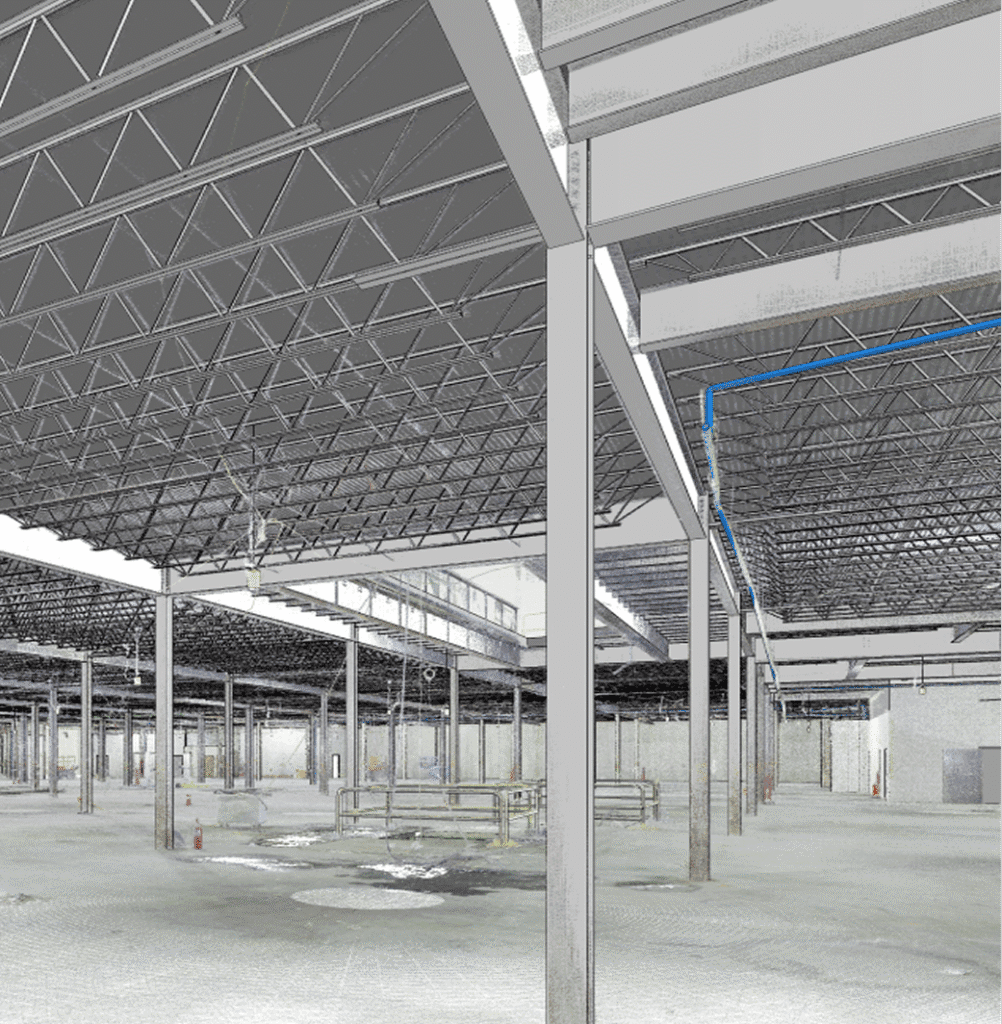
Steel deviation analysis is the process of comparing the as-built condition of installed steel to the original design model. By scanning the steel structure with high-accuracy LiDAR, we can detect even the smallest deviations in placement, tilt, or rotation long before they cause bigger problems.
Think of it as a digital reality check. Instead of relying on tape measures or visual inspection, you’re using millions of 3D data points to verify the exact position of every column, beam, and connection.
Why It Matters
Even the best construction teams face real-world variables, from minor fabrication shifts to movement during installation. Over time, these small deviations can stack up and throw off coordination for follow-up trades like concrete, curtain wall, or MEP.
When left unchecked, those discrepancies can:
- Cause misaligned connections and bolt holes
- Force field modifications that delay schedules
- Lead to rework that eats into profit margins
Steel deviation analysis catches these issues before they escalate. By identifying misalignments early, project teams can correct them immediately and move forward with certainty.
OAR’s Approach: Fast, Visual, and Reliable
Our process is designed to make deviation analysis both accurate and accessible. You don’t need to be a BIM expert to understand our reports. They’re visual, intuitive, and built for the field.
Scan the Steel
We use Leica RTC360 LiDAR scanners to capture millions of 3D points with sub-millimeter accuracy. The result is a detailed, geo-referenced model of the structure as it exists in the field.
Align With the Design
Using Cyclone 3DR software, we align the point cloud with your IFC design model to ensure both data sets line up perfectly.
Analyze for Deviations
We set custom tolerance thresholds, typically 1/8”, 1/4”, or 1/2”, and generate color-coded heatmaps that clearly show where steel is within tolerance and where adjustments are needed.
Deliver Clear Results
Our deliverables include:
- Interactive, cloud-hosted models (hover to see deviation values)
- Annotated PDF reports for quick reference
- Progress charts that track beam and column counts over time
Each report turns technical data into something every stakeholder can understand. Is the steel right, or does it need attention?
The Real Value: Time, Money, and Confidence
In construction, time saved is money saved. Rework on structural steel can cost five to ten times more than getting it right the first time. It can delay follow-up trades, push schedules, and create tension between teams.
Deviation analysis helps avoid all of that. When you know exactly where your steel stands, you can move forward with confidence.
For fabricators, it means validating precision.
For contractors, it means staying on schedule.
For owners, it means the structure is verified, documented, and dependable.
Why OAR?
At OAR, we’re not just scanning for data. We’re scanning for clarity. Our team blends field experience with cutting-edge technology to give you results you can trust and use right away.
Here’s what sets us apart:
- Early Detection: catch misalignments before they snowball
- Cost Savings: minimize rework and downtime
- High Confidence: verify that what’s built matches design intent
- Professional Reporting: clear visuals anyone can read
Whether you’re building a commercial high-rise, upgrading a manufacturing plant, or fabricating custom steel components, we make sure your structure stands exactly where it should.
The Bottom Line
Deviation analysis isn’t just about precision. It’s about predictability. It ensures your team can plan, fabricate, and build with confidence, backed by data you can see and trust.
With OAR’s Steel Deviation Analysis, you get the accuracy, speed, and insight to keep your project on track. Every beam, every column, every time.
FAQs
How small of a deviation can be detected?
With high-accuracy LiDAR and proper alignment, deviations at the sub-millimeter level (or within tolerance thresholds like 1/8”) can be identified.
How frequently should steel deviation analysis be performed?
Best practice is to tie scans to milestones, such as after erection or before major follow-up trades, so issues are caught while still accessible.
What tolerances should we track?
Typical tolerance thresholds are set at 1/8”, 1/4”, or 1/2”, depending on project requirements and follow-on trades.
How does this tie into BIM workflows?
Deviation analysis bridges field reality and BIM. We compare as-built point cloud data to the design model to flag discrepancies before they become costly.
What deliverables will we receive?
You’ll get interactive models, annotated PDF reports, and progress charts. These create a clear record of built versus design intent.