Laser Scanning & Equipment Coordination for Suppliers & Integrators
OAR provides the verified site data and coordination support that equipment suppliers and system integrators need to design, quote, and install with confidence. We scan the facility, coordinate your layout against existing building systems, and ensure everything fits before your crew arrives.
OAR serves equipment suppliers and system integrators across the Northeast: Connecticut, Massachusetts, Maine, New Hampshire, New York, Rhode Island, and Vermont. BIM Coordination & Virtual Construction is delivered remotely nationwide.
You engineered it to fit. We verify that the building agrees.

Verified Site Data Before You Quote
Your Layout Fits the Building Around It
Faster Installations, Stronger Client Relationships
One Scan Serves Your Entire Client Relationship
Verified Site Data Before You Quote
Your clients expect accurate equipment layouts and competitive pricing, but the site drawings they provide are often outdated, incomplete, or missing critical building systems entirely.
When you design and quote from unverified data, you carry the risk of misalignment into every project.
We scan the facility and deliver verified geometry, so your engineering team designs against what is actually there.
Your Layout Fits the Building Around It
You engineer your equipment to spec, but the space it installs into has sprinkler mains, electrical conduit, structural bracing, and HVAC ductwork that your layout drawings were never designed to account for.
We coordinate your equipment layout against the scanned existing conditions, so every interface between your scope and the building scope is resolved before fabrication.
Faster Installations, Stronger Client Relationships
When your installation crew arrives to a site where clearances are verified, routing is resolved, and every trade knows the sequence; the install goes faster.
• Fewer field modifications.
• Fewer emergency calls back to engineering.
• Your client sees a clean execution, and that is what drives repeat business and referrals.
One Scan Serves Your Entire Client Relationship
The scan data from one project does not expire when the installation is complete. The verified facility model supports future equipment upgrades, capacity expansions, and maintenance planning at the same site.
One investment in reality capture creates a foundation that serves every future project you do with that client.
Three services. One partner.
OAR supports equipment suppliers and integrators across the full project lifecycle with three integrated services.
3D Laser Scanning
Verified site geometry before you design.
We scan your client’s facility and deliver verified 3D geometry in the format your engineering team needs. Point clouds, Revit models, CAD exports, or equipment-specific deliverables. Your team designs from real site conditions instead of drawings your client pulled from a filing cabinet.
BIM Coordination
Your scope and the building scope resolved in one model.
We coordinate your equipment layout against the existing building systems: structural, mechanical, electrical, plumbing, and fire protection. Clashes between your scope and the building scope are resolved in the model before fabrication. Your install crew arrives to a space where everything fits.
Digital Delivery
Data that keeps working after the installation.
We structure and deliver project data so it stays useful beyond the installation. Your client receives organized, accessible documentation. Your team retains the verified facility model for future projects at the same site. The data architecture supports quoting, design, and coordination across every engagement with that client.
Project types we support.
Site scanning and coordination for new sorting line installations or upgrades to existing lines. Verified clearances and clash detection against existing building systems before fabrication.
Scan-verified existing conditions for conveyor routing, transfer point integration, and structural support planning in active facilities.
Verified site geometry for equipment foundation planning, utility tie-ins, and clearance verification before heavy equipment delivery.
Coordination of optical sorters and robotic systems against overhead structure, conveyor positions, and utility routing in existing facilities.
Existing conditions capture and coordination for production line installations in active food and beverage facilities where production continuity is non-negotiable.
Site scanning and layout coordination for packaging automation, robotics, and process integration projects in manufacturing and distribution environments.
Verified facility documentation for capacity expansion planning, equipment relocation, and facility modernization projects where accurate existing conditions are critical.
From site scan to installation-ready data.
Point clouds and 3D models of the existing facility delivered in the format your engineering team uses. Real dimensions, real clearances, real routing paths.
Your equipment layout coordinated against all existing building systems. Clash reports, resolution documentation, and updated drawings ready for fabrication.
3D installation sequences that account for phasing, access paths, rigging clearances, and adjacent operations. Your install crew knows exactly what happens in what order.
Verified post-installation documentation that confirms the equipment was installed per the coordinated model. Your client receives a clean record for operations and future projects.
Organized, structured scan data that your team can reference for future projects at the same facility. Quote faster, design faster, and start every return engagement from verified data.
Equipment coordination in an active facility.
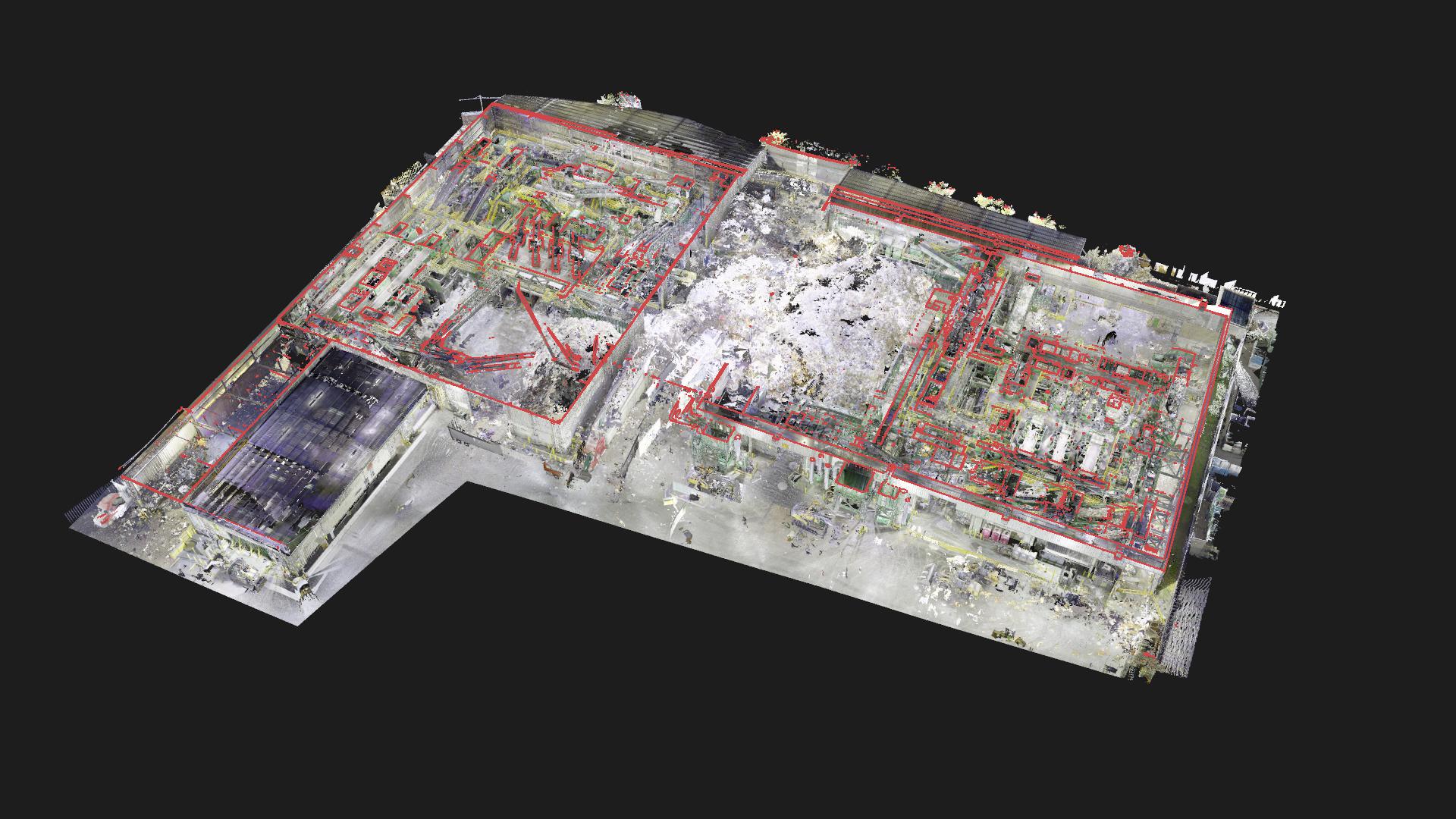
Large-Scale MRF: Optical Sorter Installation
GreenWaste San Jose Material Recovery Facility · Active Single-Stream MRF · Equipment Integration
Facility scanned during active operations
Spatial conflicts identified before fabrication
Field conflicts at installationField conflicts at installation
An active single-stream materials recovery facility needed to install a new optical sorter into existing overhead structure without disrupting ongoing operations. OAR performed weekend scanning of the full facility, delivered a LOD 300 Revit model, and ran clash detection against the new equipment model. All 27 conflicts were resolved before fabrication began. The equipment was installed without a single field conflict.
From the field.
Posted on Google
 Maxwell Capon
Trustindex verifies that the original source of the review is Google.
Jon and his team were great! Very response and the deliverables were exactly what we needed!Posted on Google Chris HerrmannI hired OAR to scan a 14,000 mixed-use retail and office building that I purchased and needed a solid set of 2D drawings of. This proved to be a cost effective way to get those, plus SOOO much more. The level of detail they produced is exceptional and will save time and cost for many years to come. They did what they said they were going to, were very accommodating of tenants in an existing and fully occupied building, and were great to work with in general. I would highly recommend them to anyone with a similar need.Posted on Google
 eturbo924OAR has proven to be an exceptional partner that has truly revolutionized our operations. We've had the pleasure of collaborating with Ryan and his team, and their expertise has been pivotal in addressing complex challenges related to software interoperability, design enhancement, and workflow streamlining. The transition from conventional 2D design to the dynamic world of 3D and BIM was made possible and seamless through OAR's unparalleled contributions. One of the standout features of OAR's service is their remarkable scan-to-BIM capability. The precision and accuracy with which they transform real-world scans into comprehensive BIM models is nothing short of remarkable. This aspect alone has elevated the quality of our projects to new heights, enabling us to work with existing conditions in ways we hadn't imagined before. What truly sets OAR apart is not only their exceptional technology, but also their unwavering commitment to delivering excellence. Their service is a true testament to their dedication, as they consistently ensure that the systems we rely on day in and day out operate flawlessly. This level of reliability has undoubtedly accelerated our project timelines, allowing us to make informed decisions based on a newfound depth of existing conditions data. Having partnered with OAR for the past two years, it's clear that they've become an indispensable asset to our success. Their impact on our projects is undeniable, and the transformational journey from our initial engagement to the present day has been nothing short of remarkable. As a small business, OAR's dedication, innovation, and exceptional service have proven that size is no measure of capability. In light of our extraordinary experience, I wholeheartedly recommend OAR without reservation. If you're seeking to leverage the power of laser scanning and BIM, there's simply no better choice. OAR's expertise, passion, and commitment to excellence make them the first and only call you need to make. They don't just deliver a service; they deliver a transformative partnership that propels your projects to unprecedented levels of success.Posted on Google
 Mike OraschewskyProfessional, timely and highly accurate scanning and modeling by OAR has saved me $$$. Having a single 3D source of truth for engineers, OEMs and tradesmen made my last project a breeze.Posted on Google
 Mike OraschewskyI hired OAR to do a pre-construction scan to point cloud mesh and 2D CAD of my new building. I am glad I did: the integrations engineer, GC, subs, and equipment manufacturers (most of whom are overseas) are delighted to have the ability to step into the space and confirm fit and plan my construction intelligently based on onsite conditions. Most importantly - with Jon and Ryan this business goes above and beyond. I had concerns my design/construction group wouldn’t use what OAR provided but Ryan and Jon took the time after they delivered the point cloud and drawings to show my team how to use this tool to make sure it saves my team’s time and by extension: my money in construction. We are making last minute design changes now that if not identified would’ve cost 5 figures $. This technology is exciting to use as a project owner. I’m considering having them back out for an as-built once construction completes. And I’ll always have them do a pre construction scan on any factualities I buy going forward. Thank you OAR.Posted on Google
 Jean-philip GiguèreFast, precise and affordable. They greatly simplify difficult tasks!Posted on Google
 Alex QuarterleyOAR's team has been great to work with throughout multiple large scale scan to BIM projects. High attention to detail, accurate scan data, proper BIM implementation and consistent communication/support from OAR has helped to improve our project quality and efficiency from start to finish.
Frequently asked questions
Yes. We scan during live operations without disrupting production. Our field teams are experienced in active industrial environments including MRFs, food production facilities, and manufacturing plants.
We deliver in the format your engineering team needs: point clouds (RCP, E57, LAS), Revit models, AutoCAD, Civil 3D, or equipment-specific formats. We confirm deliverable specs before mobilization.
Yes. We run clash detection between your equipment layout and all existing building systems: structural, mechanical, electrical, plumbing, and fire protection. Conflicts are resolved in the model before fabrication.
Typically within one to two weeks of scope confirmation. For time-sensitive installations, we can accommodate faster timelines. Point cloud delivery is 3 to 5 business days after scanning.
Yes. We structure every delivery so the data remains usable for future projects. Your team can reference the same verified dataset for quoting, design, and coordination on return engagements without rescanning.
Both. We can engage directly with your engineering team as a technical partner, or work with the facility owner and deliver data to all parties. The engagement model adapts to how you prefer to manage your projects.
We document every clash, classify it by severity and trade responsibility, and facilitate resolution. Your engineering team sees the exact location and dimensions of each conflict in the 3D model and can adjust the equipment layout or coordinate with the building contractor to resolve it before fabrication. The goal is zero field conflicts at installation.