Michigan MRF: Lifecycle BIM Coordination from Concept to Commissioning
The Project
A state-of-the-art materials recovery facility in Detroit required full lifecycle BIM coordination: from initial equipment layout through installation and commissioning. The project involved multiple vendors, fabricators, and field crews working in parallel across a complex facility with new sorting equipment, conveyor systems, structural platforms, and utility infrastructure. OAR served as the BIM coordination lead throughout, connecting all project stakeholders through a Common Data Environment and managing the digital thread from design through closeout.
Multiple vendors. One facility. Zero room for field conflicts.
Coordinating a large MRF equipment installation requires synchronizing designers, equipment suppliers, fabricators, and field crews who are rarely working from the same information at the same time. Facility drawings were either outdated or unavailable for certain areas, and the equipment supplier needed verified existing conditions before committing to fabrication tolerances. Without a central coordination environment, conflicts between new equipment and existing structure would surface during installation — when fixing them is most expensive. The project timeline left no room for change orders, RFIs, or shutdown extensions.
One model. All stakeholders. Every phase.
Common Data Environment & Existing Conditions
OAR established a Common Data Environment connecting the design team, WM site team, equipment vendors, fabricators, and field contractors into a single shared platform. Concurrent with CDE setup, OAR performed a full LiDAR scan of the facility and delivered a verified Revit model of existing conditions — giving every stakeholder a single, accurate starting point for design and coordination work.
Equipment Layout, Clash Detection & Quantity Takeoffs
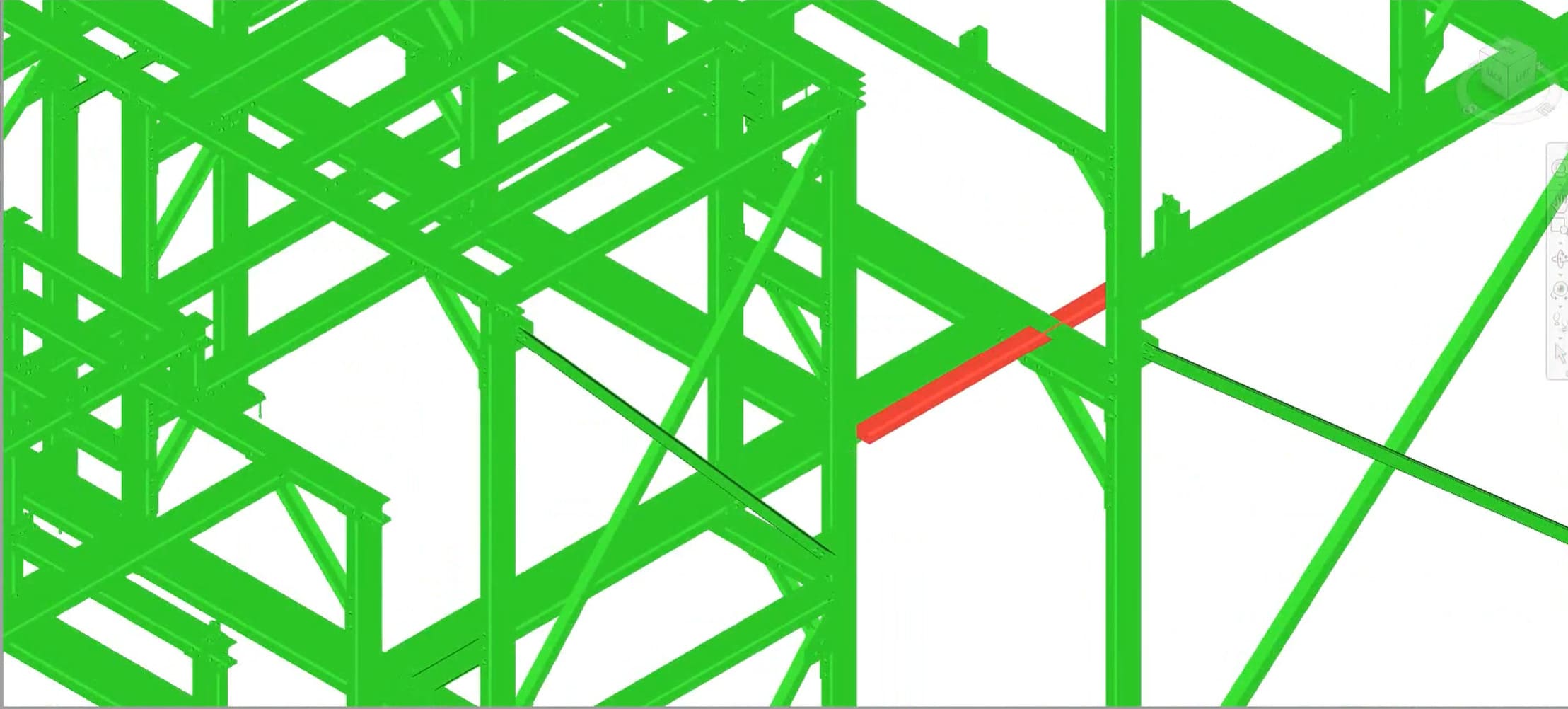
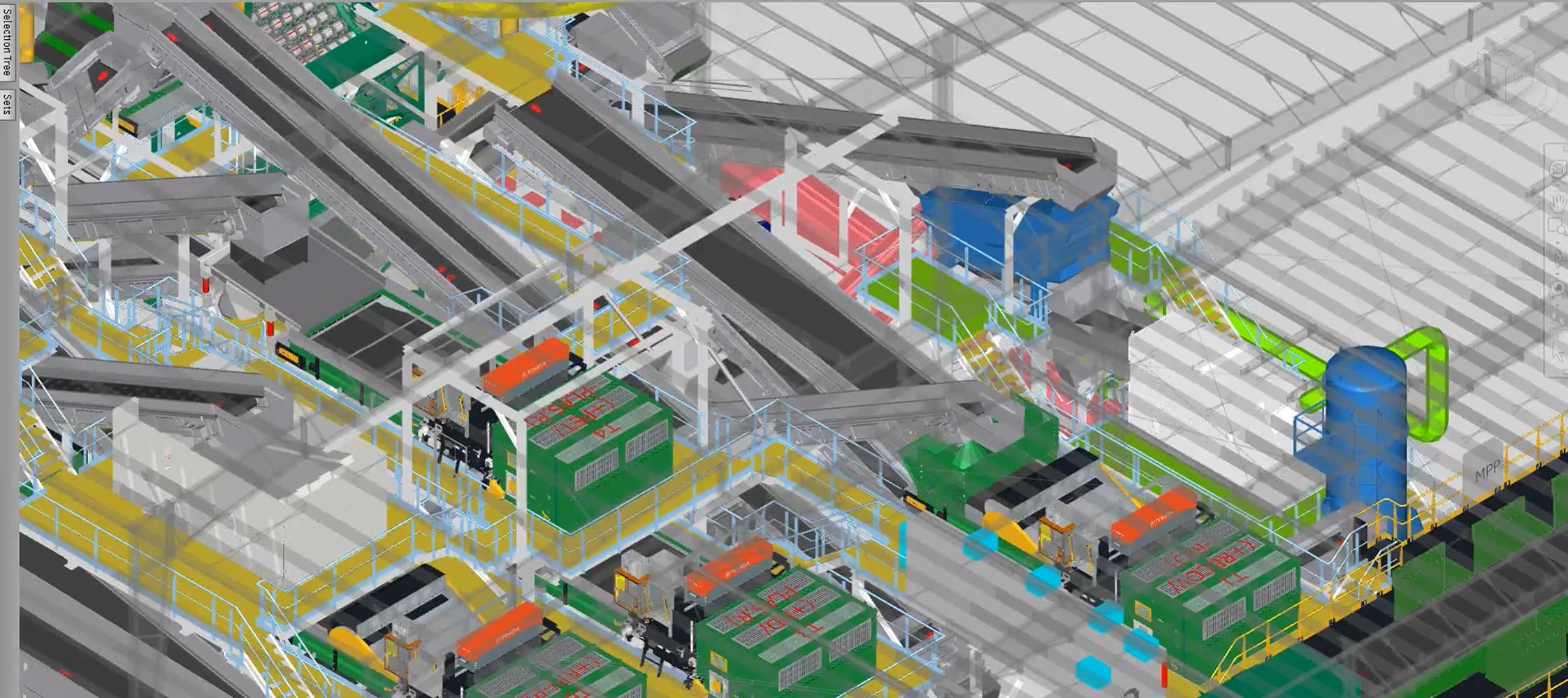
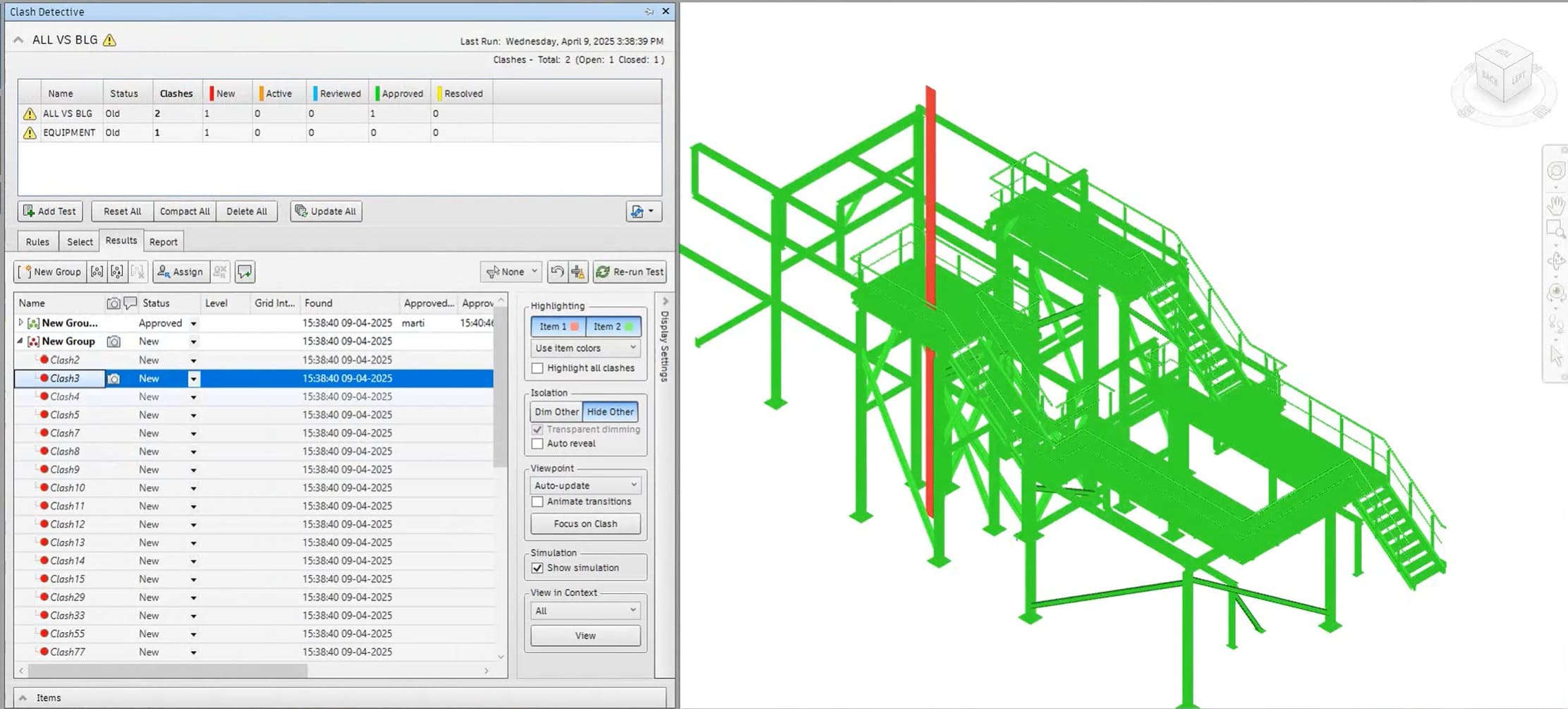
All equipment components — sorting systems, conveyors, structural platforms, fire suppression, lighting, and egress — were placed and evaluated within the coordinated 3D model. OAR ran programmatic clash detection across all systems and managed issue resolution through ACC, tracking every conflict from identification through approval. Quantity takeoffs derived directly from the model supported pre-bid procurement, improving bid accuracy before fabrication began.
Fabrication Drawings, Time-Sequenced Install & Field Support
OAR produced fabrication and installation drawings derived from the coordinated model, ensuring field crews and fabricators worked from a single verified source. A time-sequenced installation simulation mapped weekly milestones for all vendors and trades, reducing crew downtime and defining task dependencies before mobilization. During installation, BIM models extended into the field through AR overlays, enabling real-time verification and immediate communication of field conditions back to the project team. At closeout, OAR delivered a comprehensive digital package including LOTO maps, safety plans, and emergency layouts.
On schedule. Zero field conflicts. Fully documented.
The Detroit MRF installation was executed on schedule with no field conflicts requiring unplanned design changes. Every clash had been identified and resolved in the digital environment before fabrication began — the installation crew worked from coordinated models with a clear sequence and no surprises. At project closeout, the facility team received a complete digital twin: a color-coded, equipment-accurate Revit model reflecting the as-installed state of the facility, along with full closeout documentation for ongoing operations and future retrofits.
Existing conditions Revit model (LOD 300) from full LiDAR scan
Quantity takeoffs from model for pre-bid procurement support
Coordinated multi-trade BIM model — equipment, structure, MEP, fire suppression, and utilities
Fabrication and installation drawings derived from coordinated model
Clash detection reports with full issue log tracked in Autodesk Construction Cloud
As-installed digital twin with color-coded equipment models
Closeout documentation package — LOTO maps, safety plans, emergency layouts