Midwest MRF Documentation: LOD 300 As-Built Model of a 100,000 SF Active Recycling Facility
The Project
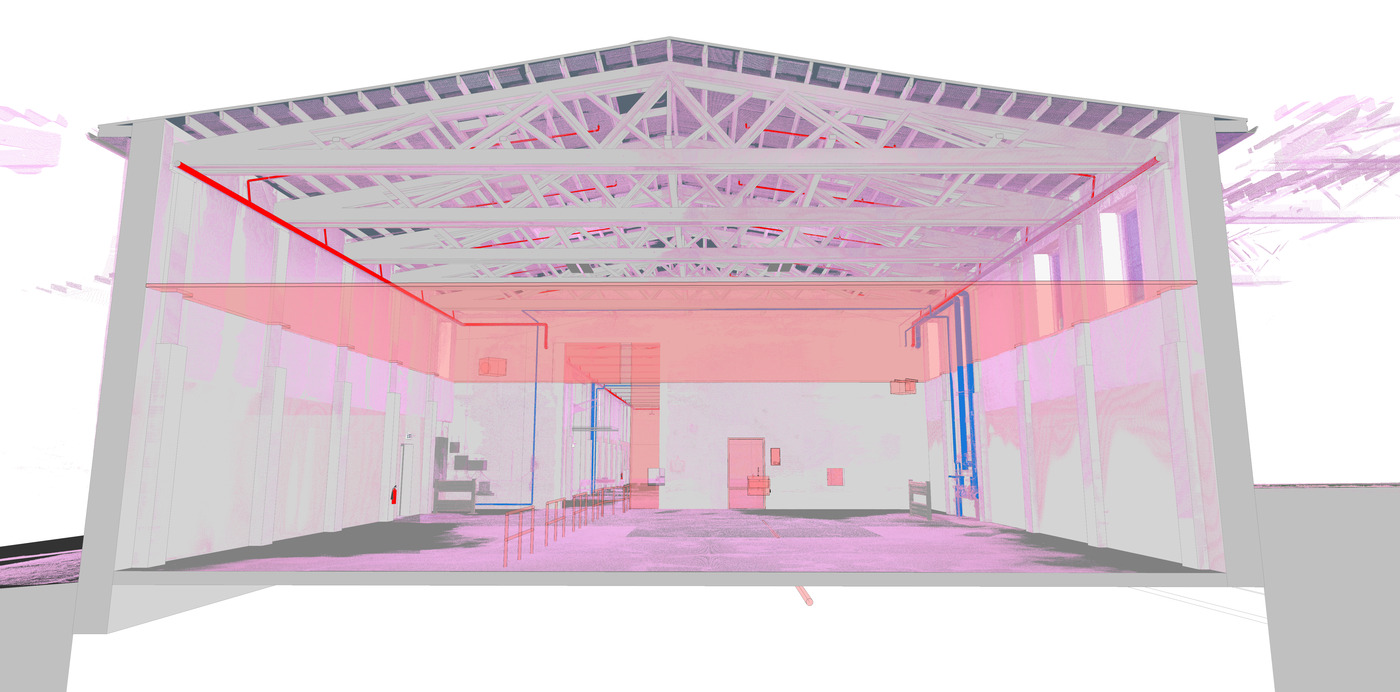
A large-scale materials recovery facility in Minneapolis required comprehensive as-built documentation ahead of a planned retrofit. The facility had no reliable existing drawings: decades of equipment changes, conveyor modifications, and platform additions had made any original documentation obsolete. OAR performed a full LiDAR scan of the ~100,000 SF facility and delivered a complete LOD 300 Revit model and registered point cloud, giving the client a verified digital baseline to plan and execute the retrofit without guesswork.
Scale, complexity, and zero margin for incomplete data.
At approximately 100,000 SF, Minneapolis was one of the largest single-facility scans OAR has executed for Waste Management. The facility was fully operational throughout the engagement, with continuous material flow across multi-level conveyor systems, structural catwalks, and dense equipment layouts. Site conditions were tight: scan positions had to be planned precisely to achieve full coverage without interfering with operations. The absence of any existing as-built documentation meant there was no fallback — the model had to be comprehensive and accurate from the first pass.
Methodical coverage of a complex, active environment.
Multi-Station LiDAR Scanning
OAR coordinated scan positioning around active material flow, placing scanner stations across all facility levels: sorting lines, conveyor infrastructure, structural platforms, catwalks, overhead systems, and building perimeter. Each station was planned to maximize overlap and ensure no area was missed in a single mobilization, avoiding the cost and disruption of a return visit.
Point Cloud Registration & QC
All scan stations were registered into a single, georeferenced point cloud dataset. Quality control was performed to verify spatial accuracy across the full footprint, with particular attention to the multi-level catwalk and equipment zones where registration errors would have the greatest downstream impact on retrofit planning.
LOD 300 Revit Modeling
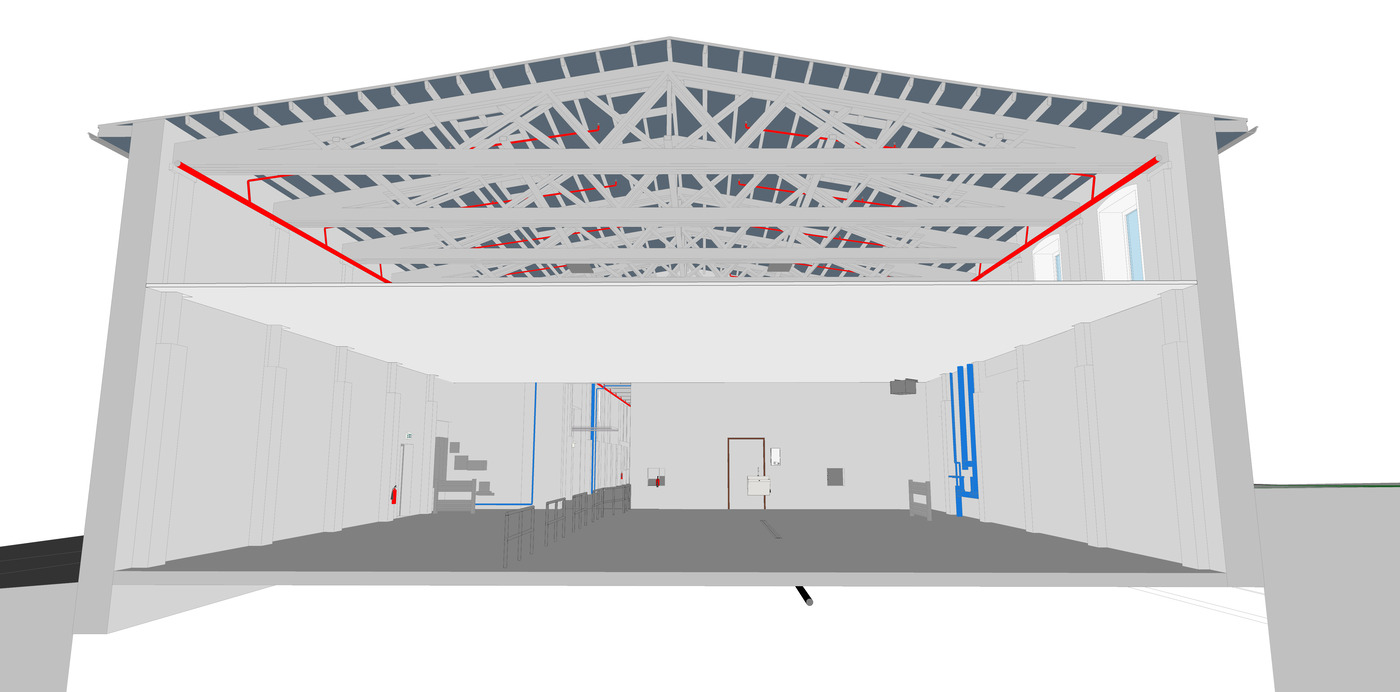
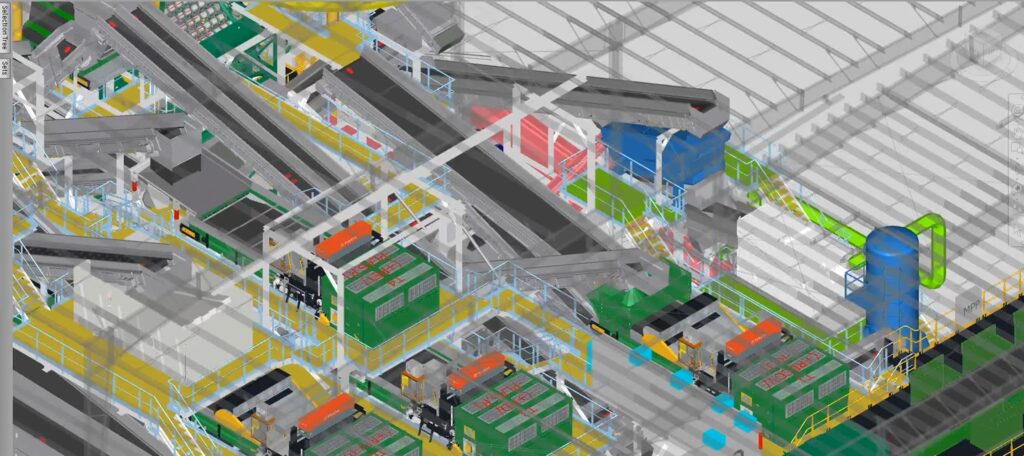
OAR built a complete LOD 300 Revit model from the point cloud, capturing existing structural conditions, equipment footprints, conveyor routing, platform geometry, and overhead infrastructure. The model was structured to support retrofit planning directly, giving the client’s design team and equipment suppliers a reliable digital environment to work from without return site visits.
A complete digital baseline for retrofit-ready planning.
The client received a fully registered point cloud and an LOD 300 Revit model covering the entire ~100,000 SF facility, including all conveyor systems, structural platforms, catwalks, and equipment layouts. With a verified as-built model in hand, the facility’s engineering team can evaluate retrofit options, coordinate equipment suppliers, and plan installation sequences in a controlled digital environment before any physical work begins. The single-mobilization approach eliminated the cost and disruption of follow-up site visits.
Registered point cloud (RCP/RCS formats) — full 100,000 SF facility coverage
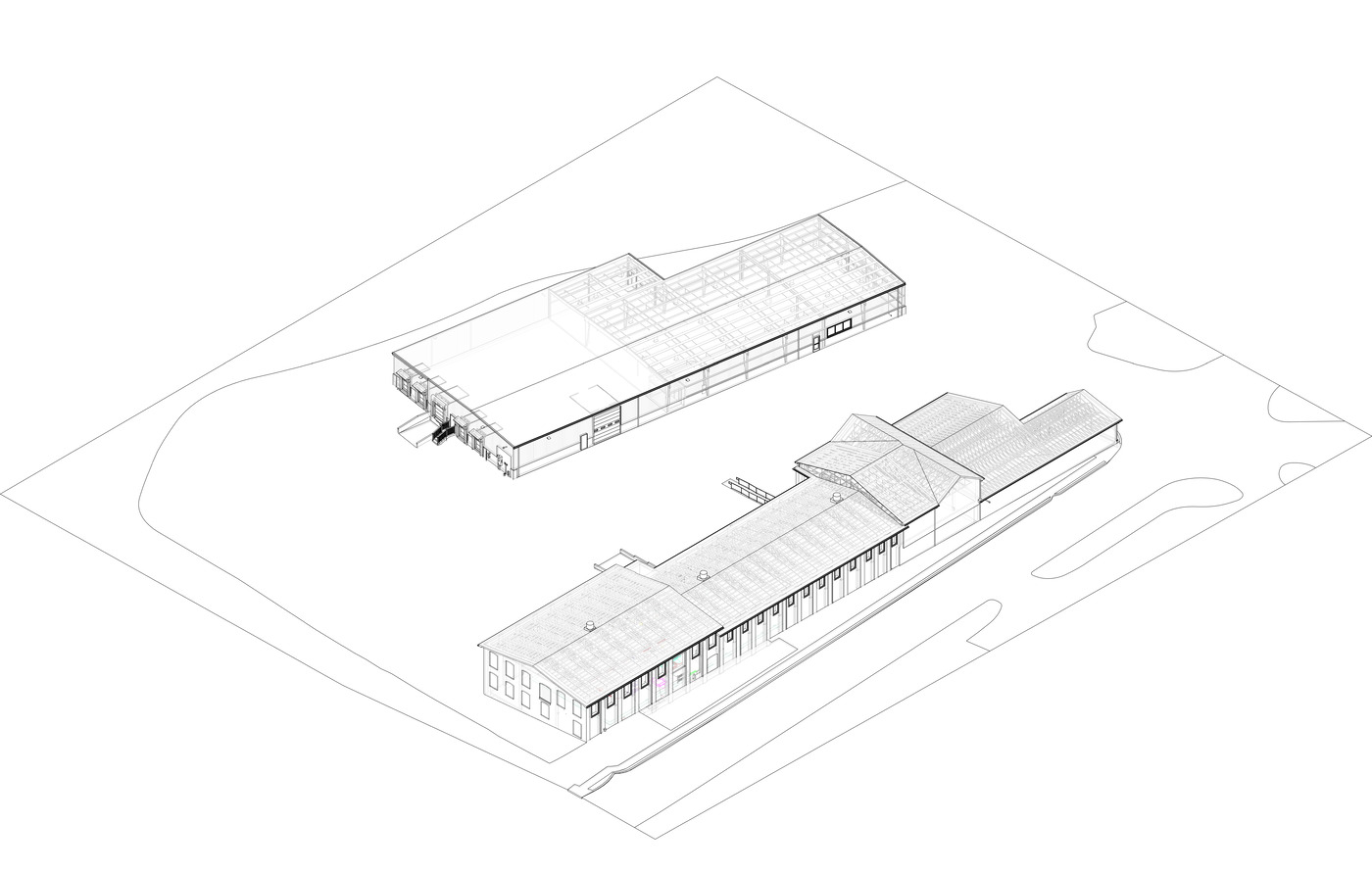
Multi-level orthographic views for retrofit planning reference
LOD 300 Revit model — structural, conveyor systems, platforms, catwalks, and equipment footprints
Fly-through video documentation for stakeholder review