GreenWaste MRF Capacity Expansion: 40,000 Ton/Year Increase Without Throughput Loss
The Project
A California materials recovery facility needed to install an optical sorter into an active recycling facility. The installation required precise spatial coordination to fit new equipment into existing overhead structure without disrupting ongoing operations. OAR provided 3D Laser Scanning, Scan to BIM modeling, and clash detection, giving the equipment supplier accurate field conditions before a single piece of fabrication began.
Working inside an active facility.
The facility processes material continuously, with minimal scheduled downtime. Scanning had to happen during a reduced-capacity weekend window without interrupting throughput. Overhead clearances were tight, structural drawings were outdated, and the equipment supplier needed verified field geometry before committing to fabrication tolerances. There was no margin for error. Conflicts discovered at installation would have halted operations.
Scan, model, coordinate. In sequence.
Non-Intrusive Laser Scanning
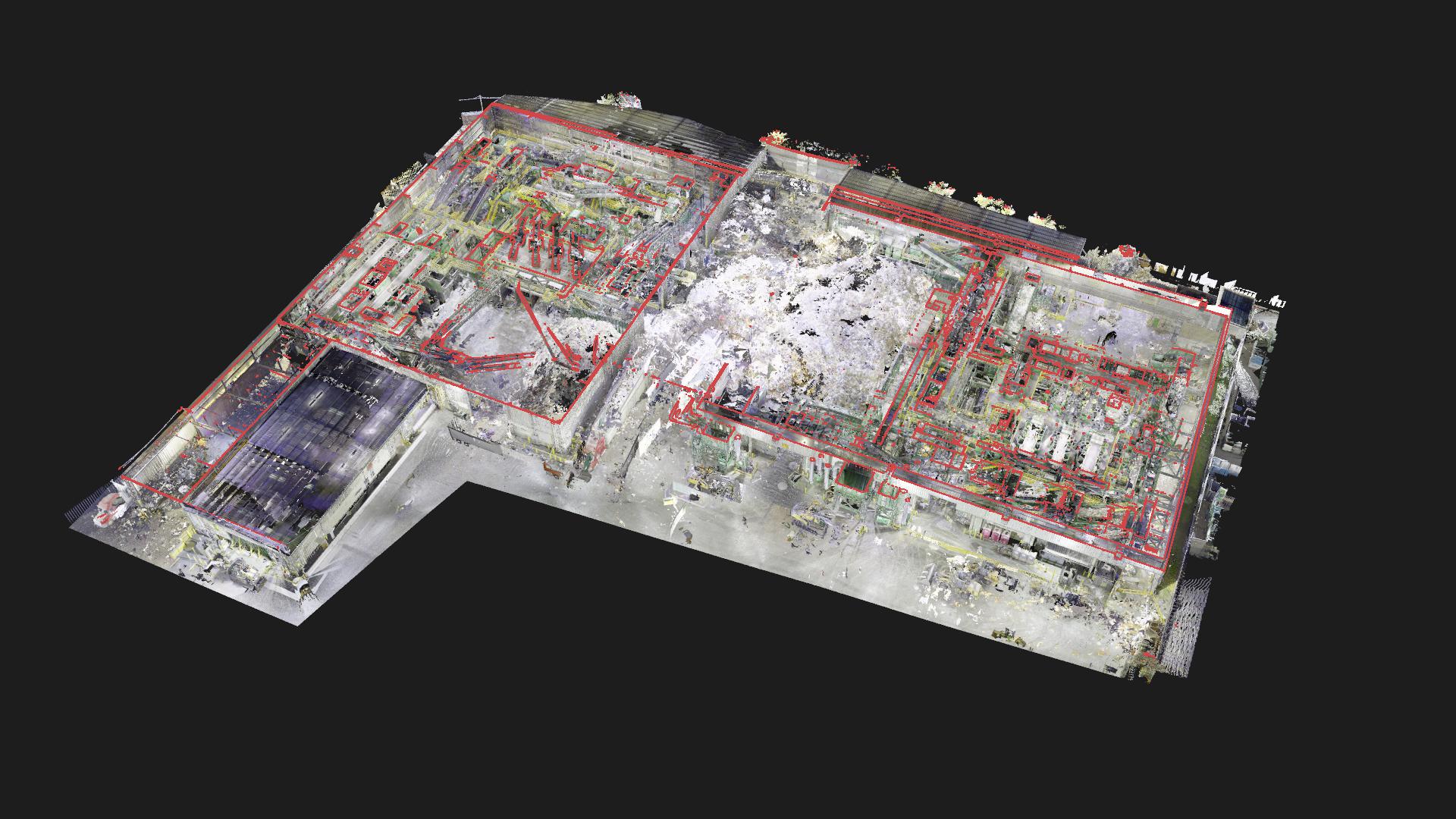
OAR mobilized during a weekend reduced-capacity operation, positioning scanners outside material flow paths. Complete facility geometry captured: sorting lines, conveyors, overhead cranes, catwalks, utilities, and structural systems — without disrupting recycling operations.
Scan to BIM & Supplier Coordination
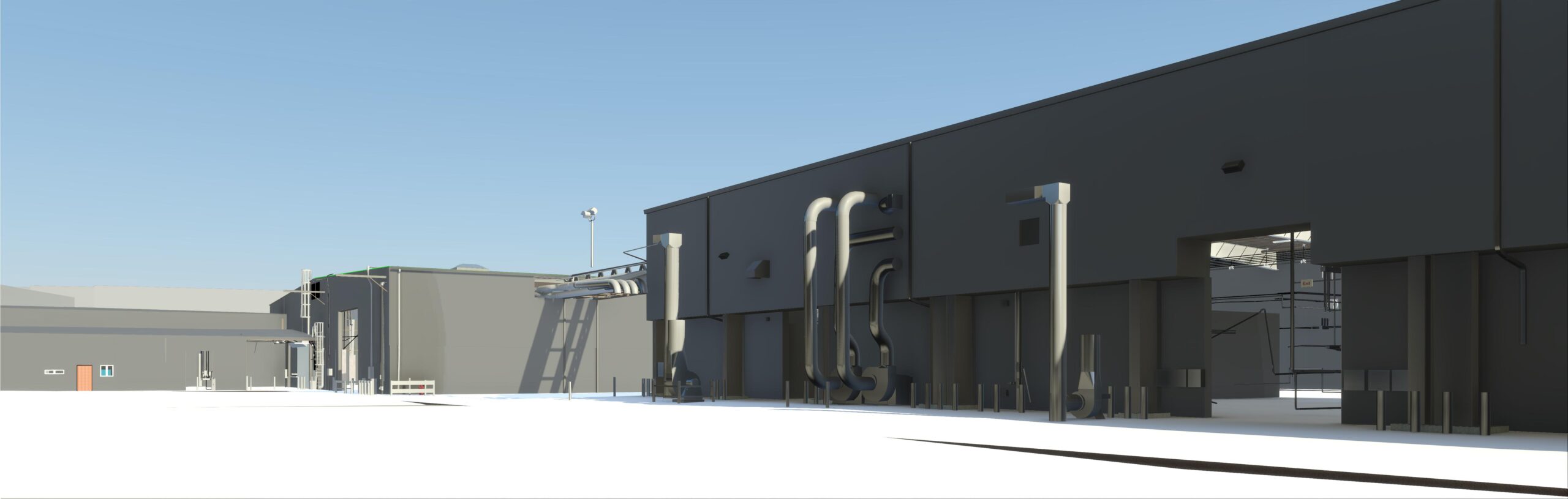
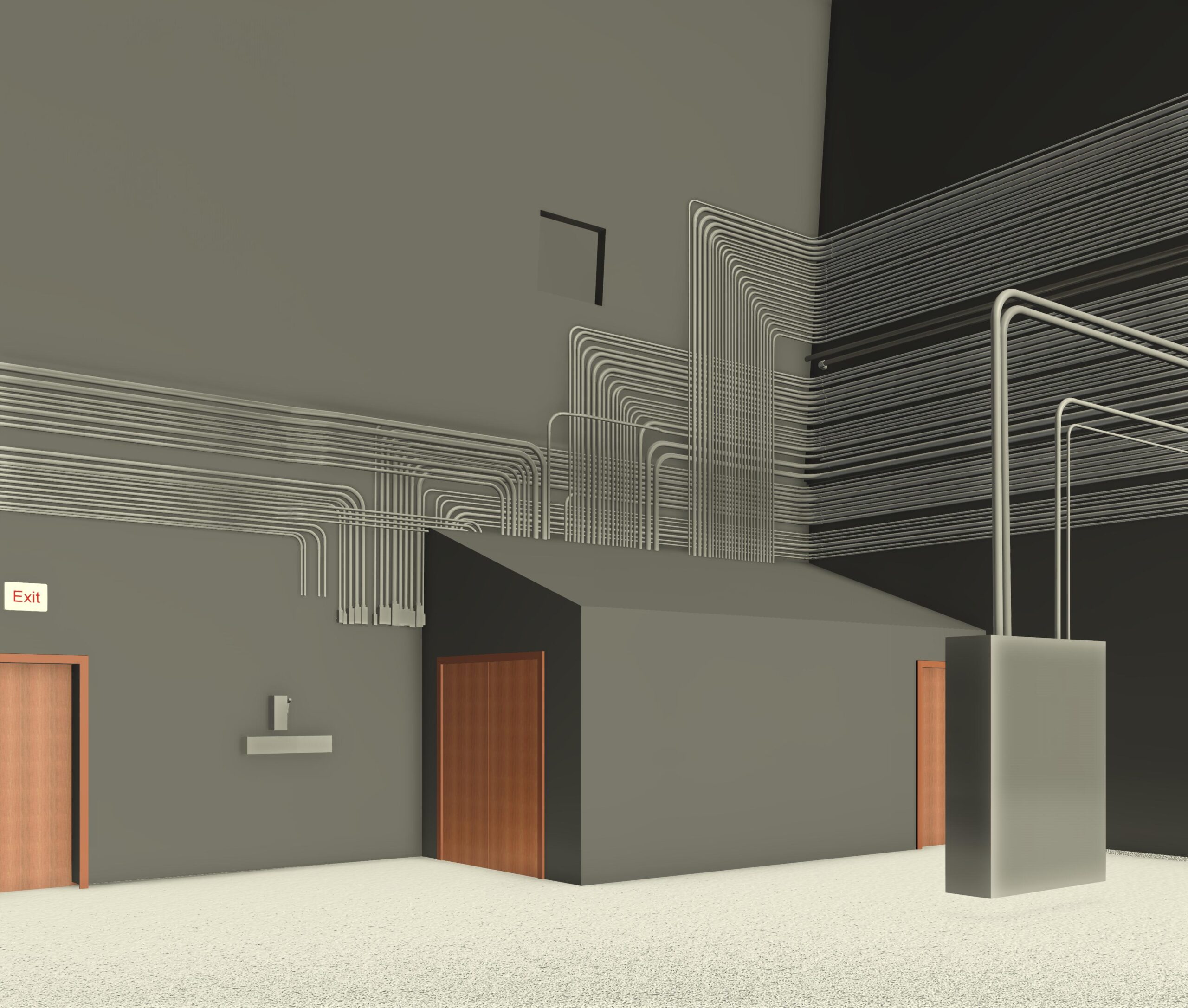
OAR converted the point cloud into an intelligent Revit model focused on overhead structure mapping. Delivered to the equipment supplier within 3 business days of scanning, allowing their design team to integrate actual field conditions into the optical sorter installation design.
3D Clash Detection & Resolution
OAR integrated the optical sorter CAD model with the existing facility scan and ran comprehensive clash detection. 27 spatial conflicts identified: 8 hard clashes, 12 soft clashes, 7 conveyor elevation conflicts. All resolved before fabrication began.
Zero field conflicts at installation.
The optical sorter was installed within a 72-hour window, compared to the 5 to 7 days typical for a project of this complexity. All 27 pre-identified conflicts had been resolved before fabrication, which meant the installation crew walked in with a clear sequence and no surprises. Total project delivery took 8 weeks from mobilization to final coordination sign-off — 50% faster than a conventional approach.
Registered point cloud (E57, RCP formats) with web-based viewer
Existing facility Revit model (LOD 300) with overhead structure mapping
Dimensional verification report for equipment supplier
27-conflict clash detection report with resolution tracking log
Installation sequencing plan with approved modifications
Coordinated BIM model combining existing facility and new equipment