

Table of Contents
The Year Construction Robots Became Normal
Construction robotics has crossed a threshold. Autonomous equipment has moved from trade show demonstrations and pilot projects to regular deployment on commercial jobsites. What began as proof of concept is now standard practice on many jobsites. The question we’re hearing is no longer whether robots can perform construction tasks. The question is which tasks justify the deployment cost and what site conditions support successful implementation.
This shift appears to have happened because contractors solved the integration challenges that prevented robots from working reliably in real project conditions. Digital model preparation. Site logistics. Quality verification. Workforce coordination.
The robots showing up on jobsites today are not the ones industry forecasts predicted years ago. They are the ones that fit into existing project workflows with minimum disruption and maximum reliability.
What’s Actually Deployed on Jobsites Right Now
Layout and Surveying Robots
Autonomous layout robots appear to be the most widely deployed construction automation in current practice. Systems like Dusty Robotics’ FieldPrinter navigate jobsites independently, mark reference points for trades, and validate installed work against BIM coordinates. Scaled Robotics offers combined inspection and layout capabilities.
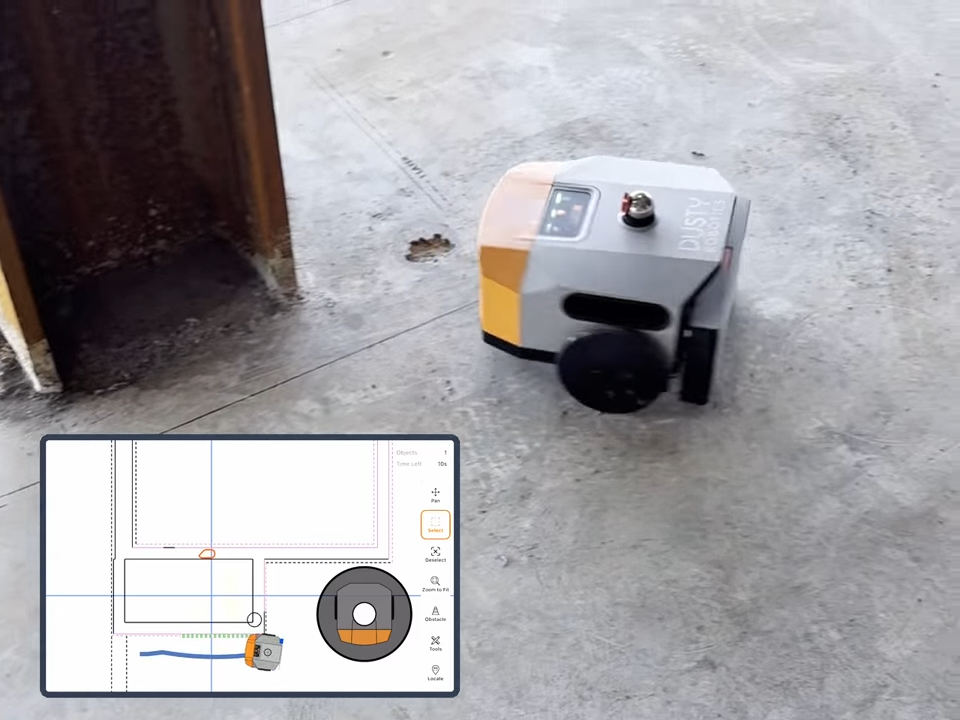
Deployment patterns we’re observing:
- Multi-story buildings: Daily layout marking for MEP rough-in, eliminates manual measurements.
- Data centers: Precision layout for equipment pads, cable tray supports, and raised floor systems
- Infrastructure: As-built verification during concrete placement, bridge deck surveys
These robots work because they integrate with existing BIM coordination workflows. The same coordinated model that drives clash detection also drives robot navigation. No separate data preparation. No parallel systems.
Contractors report 40-60 percent time savings on layout tasks and elimination of measurement errors that previously triggered rework. The ROI case seems straightforward enough that adoption accelerated rapidly once reliability was proven.
Material Handling and Logistics
Autonomous mobile robots (AMRs) from companies like Built Robotics and Boston Dynamics transport materials within jobsites. These systems operate in defined zones, moving pallets, tools, and equipment between staging areas and work locations.
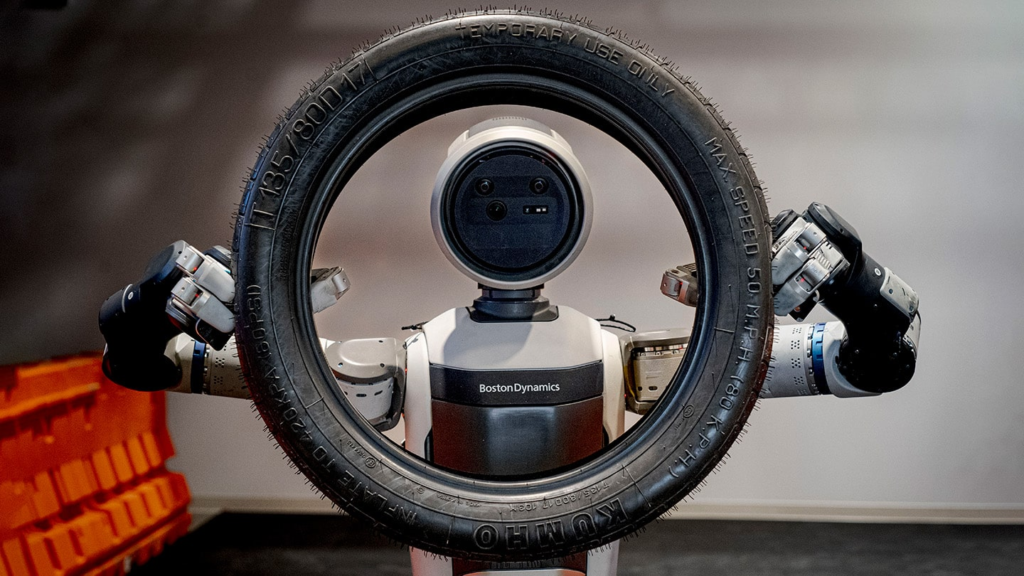
Deployment tends to focus on sites with repetitive floor plates where navigation paths stay consistent. High-rise residential, hotels, and office buildings show consistent adoption across projects. The robots run continuously during shifts, reducing elevator congestion and freeing labor for skilled tasks.
The limitation appears to be adaptability. AMRs require stable navigation environments. Sites with frequent layout changes or unpredictable obstacles create operational challenges that reduce efficiency gains.
Inspection and Documentation
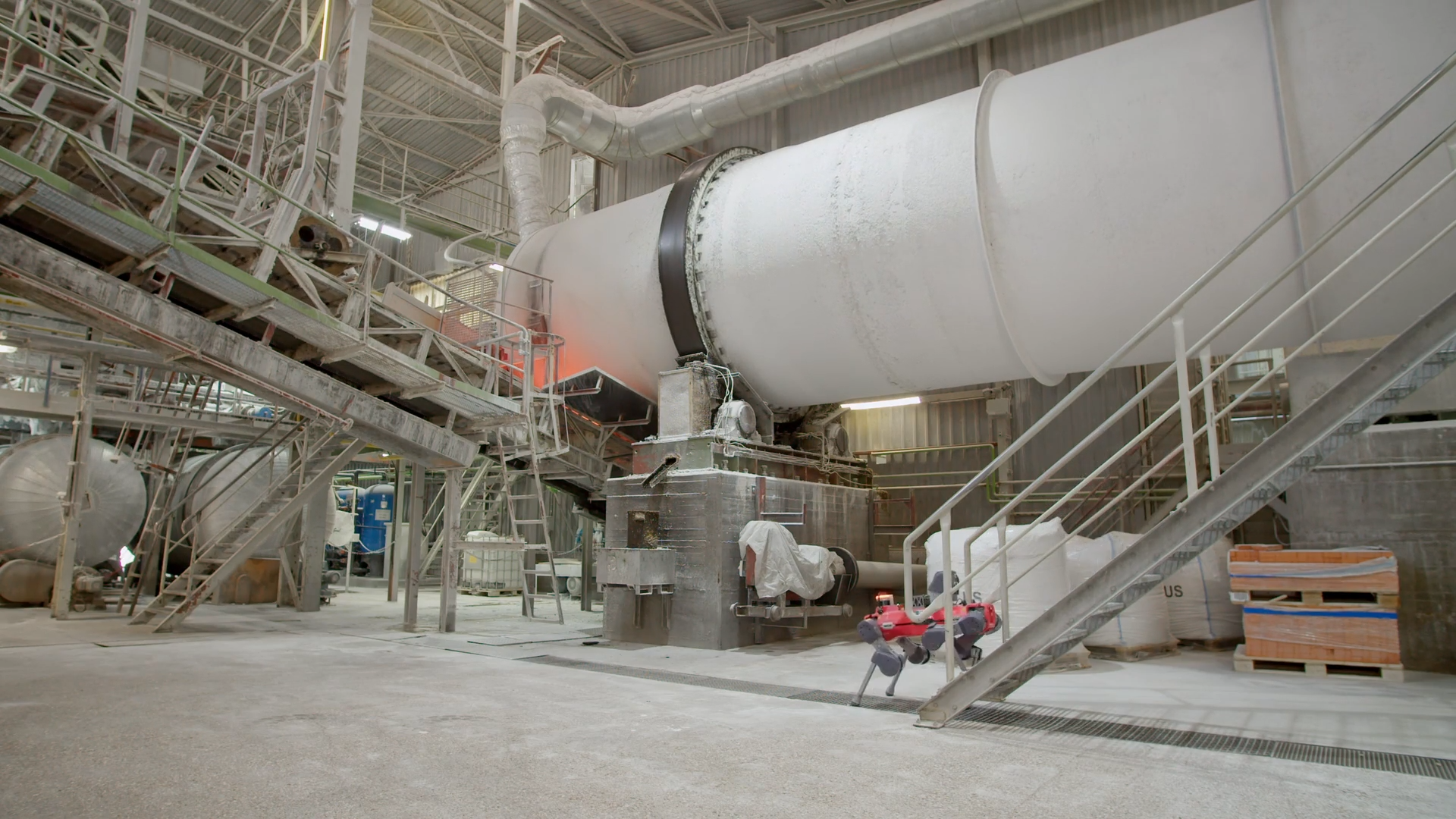
Autonomous inspection systems like Boston Dynamics’ Spot and ANYbotics’ ANYmal combine mobile robots with reality capture sensors.
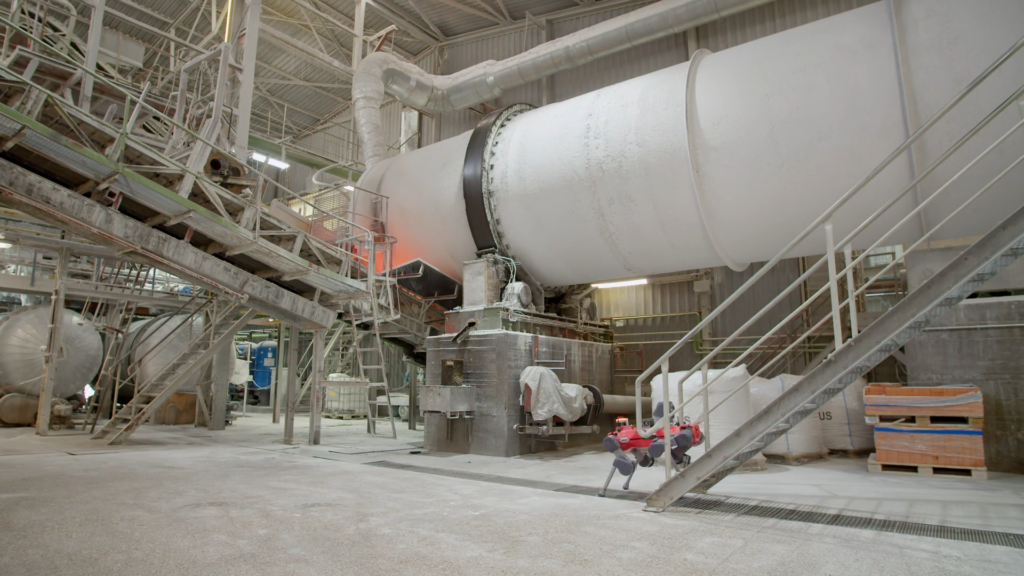
The documentation happens automatically. Robots patrol according to scheduled routes. Scans process overnight. Project teams review flagged issues the next morning. The inspection frequency increases without additional labor cost.
This application ties directly to reality capture validation workflows. The robot provides consistent data collection. The BIM model provides the reference for comparison. Integration with existing quality control processes made adoption practical.
Task-Specific Fabrication
Robotic fabrication systems for repetitive tasks are deployed where volume justifies equipment cost. Advanced Construction Robotics produces TyBOT and IronBOT for rebar tying.
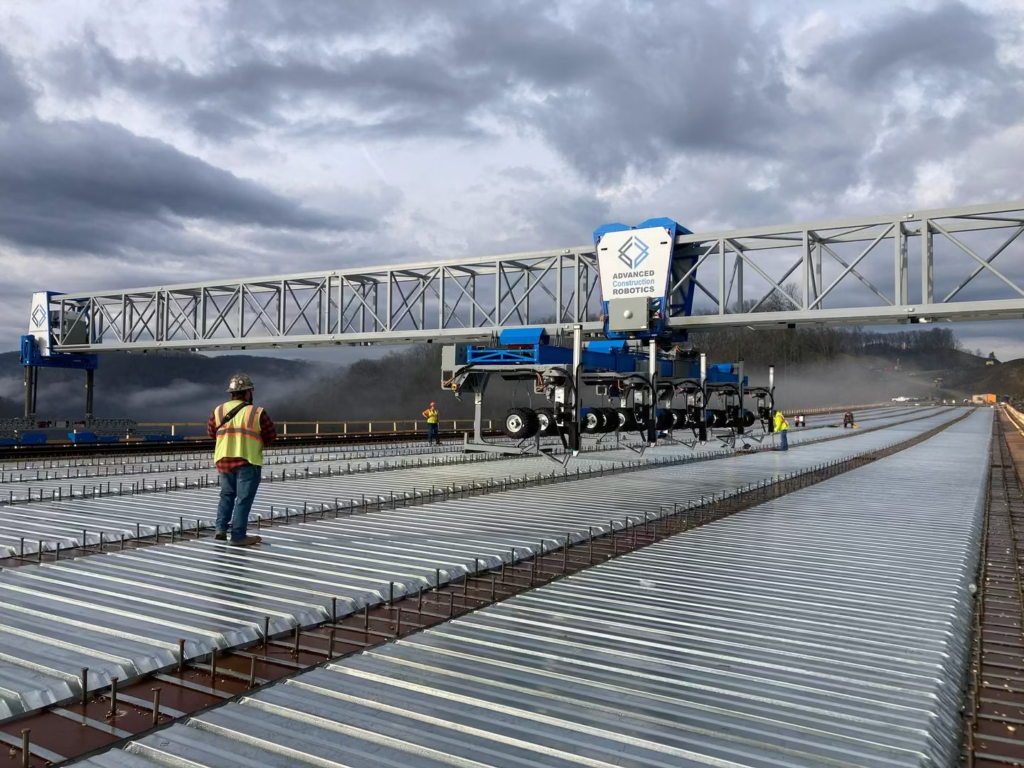
These are not general-purpose construction robots. They are specialized machines that perform one task at production speed. The deployment model resembles heavy equipment rental: contractors bring them to sites where the work volume supports the mobilization cost.
Adoption seems to concentrate in sectors with standardized building components: multi-family residential, logistics warehouses, and parking structures. Custom or low-volume work does not generate the throughput required for economic deployment.
What’s Still in Pilot Phase
Several automation technologies remain in pilot or demonstration phase despite years of development investment.
General-Purpose Construction Robots
Humanoid or multi-function robots that perform diverse construction tasks have not achieved production deployment. The technical challenges around manipulation, navigation in unstructured environments, and task adaptability remain unsolved at commercial scale.
Task-specific machines prove more economically viable than general-purpose platforms. A robot optimized for one operation consistently outperforms a flexible system attempting multiple tasks with lower efficiency.
Autonomous Heavy Equipment
Fully autonomous excavators, loaders, and dozers operate in controlled mining and earthwork environments. They have not scaled to typical commercial construction sites where equipment shares space with workers, deliveries, and adjacent structures.
Semi-autonomous systems from Built Robotics, Caterpillar Command, and Komatsu’s Intelligent Machine Control operate with human supervision. Operators control strategic decisions while automation handles repetitive movements and maintains grade control. This hybrid approach balances productivity gains with safety requirements.
3D Printing at Building Scale
Construction-scale 3D printing from companies like ICON, COBOD, and Apis Cor produces demonstration projects and specialized applications. It has not replaced conventional construction methods for mainstream commercial buildings.
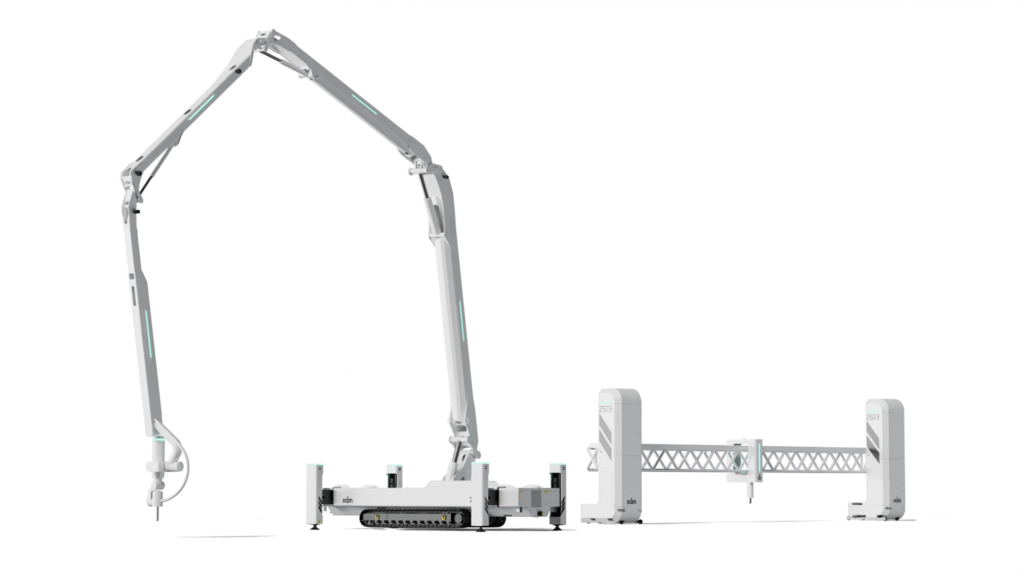
The technology works for specific building types: single-story structures, curved or complex geometries that are expensive to form conventionally, and projects where material supply chains create cost advantages for on-site fabrication. Standard commercial construction still favors traditional methods for speed and cost predictability.
What Makes Deployment Successful: Lessons from 2026
Digital Model Quality Determines Robot Performance
Robots execute instructions from digital models. Model accuracy directly determines robot reliability. Coordinate errors, missing geometry, and outdated information cause robots to fail or produce incorrect work.
Successful deployments appear to establish model quality standards before robot mobilization. This includes coordinate validation, clash resolution, and as-built verification protocols. The same coordination disciplines that reduce manual rework also enable robot operation.
Contractors are discovering that improving BIM coordination quality for robot deployment creates broader project benefits. Better models reduce errors regardless of whether robots or humans execute the work.
Site Conditions Must Support Robot Operation
Robots require clear navigation paths, consistent power access, and defined work zones. Sites with congested layouts, frequent material deliveries, or multiple trades working in proximity create operational conflicts.
Successful contractors plan robot logistics during project setup. This includes designating robot charging areas, establishing traffic patterns that separate autonomous equipment from workers, and scheduling robot operations during lower-activity periods.
The planning overhead is similar to mobilizing any specialized equipment. Projects that accommodate robot requirements see productivity gains. Projects that attempt ad-hoc deployment encounter coordination problems that eliminate efficiency benefits.
Workforce Integration Matters More Than Technology
Construction robots do not replace workers. They change what workers do. Layout technicians shift from measuring to validating robot output. Material handlers focus on staging and loading rather than transport. Quality inspectors review automated scan comparisons instead of manual measurements.
Projects that succeed with robotics train workers on the new workflows, establish clear roles for robot oversight, and maintain communication protocols between automated systems and human teams.
Resistance to robotics typically stems from poor implementation rather than technology concerns. When contractors demonstrate how robots reduce repetitive tasks and improve working conditions, workforce acceptance follows.
The Economics of Robot Deployment Today
Construction robotics operates under different economic models than traditional equipment.
1. Acquisition Models
Most contractors are accessing robotics through:
- Rental or subscription: Monthly fees based on utilization, includes maintenance and software updates
- Robot-as-a-Service: Third-party operators bring equipment and expertise, charge per task completed
- Direct purchase: Capital investment for contractors with consistent deployment across multiple projects
The subscription model dominates because it reduces risk. Contractors test robot performance on individual projects before committing to ownership. Technology improvements flow through software updates rather than requiring new equipment purchases.
2. ROI Thresholds
Robot deployment shows positive ROI when:
- Task volume justifies mobilization cost (minimum 2-3 months continuous operation)
- Labor savings exceed rental or service fees (typically 30-50 percent productivity gain required)
- Quality improvements reduce rework costs (error elimination often provides larger savings than labor reduction)
- Schedule acceleration creates value (compressed timelines justify higher deployment costs on time-sensitive projects)
Small projects or low-volume tasks do not generate sufficient return to justify robot deployment. The economics favor high-volume, repetitive work on projects large enough to absorb setup costs.
What’s Next for Construction Robotics
Current robotics development focuses on expanding deployment of proven technologies rather than introducing fundamentally new capabilities.
Improved Integration with Digital Workflows
Robot systems are gaining tighter integration with BIM platforms, project management software, and scheduling tools. The goal is reducing the data preparation overhead that currently requires specialized expertise.
Future robots will likely extract work instructions directly from coordinated models without intermediate file conversions or custom programming. This reduces deployment barriers and makes robotics accessible to contractors without dedicated digital construction teams.
Expanded Task Coverage
Current robot deployments concentrate on a few high-volume tasks. Development work focuses on expanding to adjacent operations that share similar site conditions and digital requirements.
Contractors will likely deploy multiple robot types on single projects, coordinating automated layout, material handling, and inspection within integrated workflows. The productivity gains compound when robots cover entire work sequences rather than isolated tasks.
Better Adaptation to Field Conditions
Current robots require structured environments and predictable conditions. Development work aims to improve navigation in cluttered spaces, work around obstacles, and maintain operation when site layouts change.
This adaptability will expand the range of projects that can deploy robotics economically. Sites that currently struggle with robot implementation due to congestion or frequent layout changes will become viable deployment targets.
How Reality Capture Supports Construction Robotics
Construction robots depend on accurate digital models and validated field conditions. Our laser scanning services provide the reality capture foundation that enables reliable robot operation.
We establish baseline as-built conditions for renovation projects, validate construction progress against robot-generated work, and verify final installation accuracy for automated systems. The scan data integrates directly with BIM coordination platforms that drive robot navigation and task execution.
Our BIM coordination work ensures model quality meets the accuracy requirements for robot deployment. We validate coordinate systems, resolve geometry conflicts, and establish the model integrity that prevents robot failures caused by data errors.
Whether your team is evaluating robotics for specific projects or implementing automated workflows across your portfolio, we help establish the digital infrastructure and validation protocols that make construction robotics reliable and economically viable.