
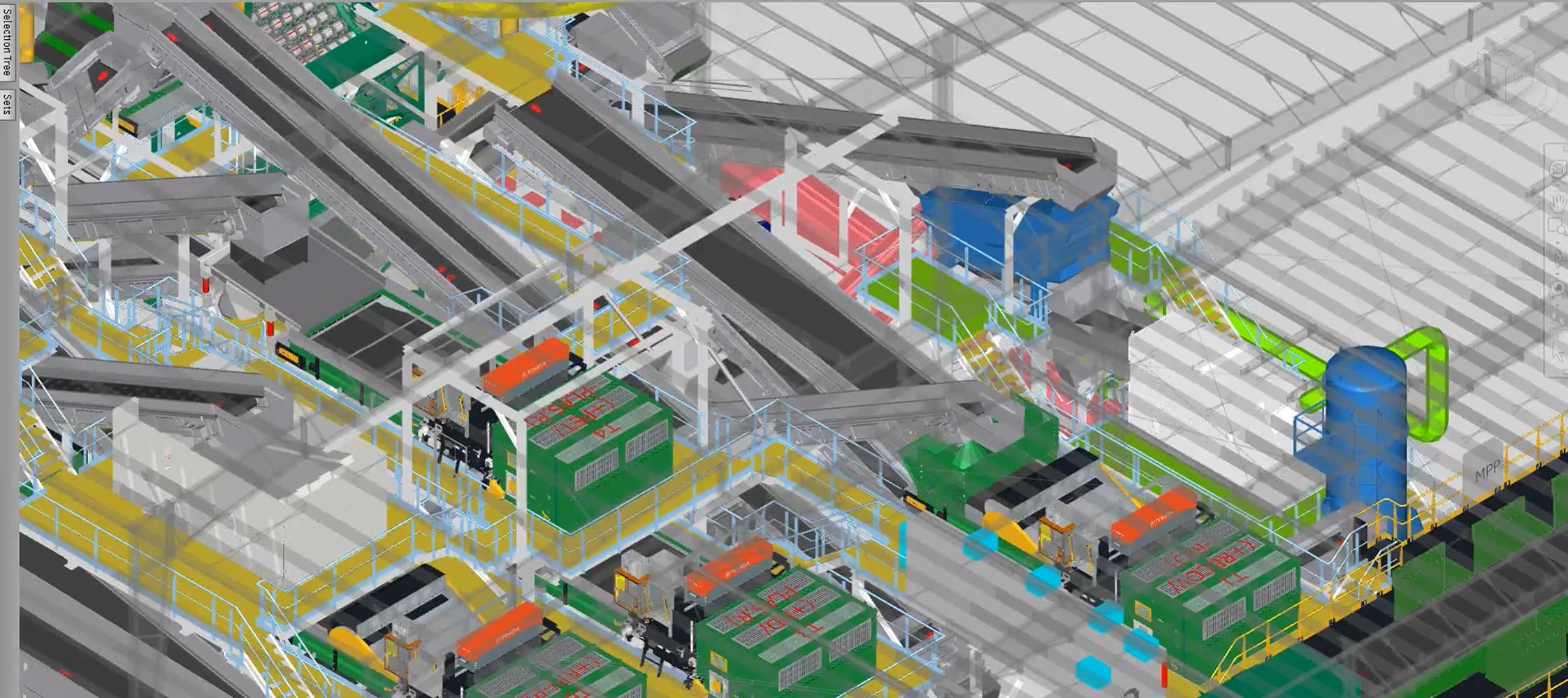
A 3D coordination model shows whether two systems occupy the same space. It does not show whether the installation sequence creates a blocking conflict, one that shows up only when a crew arrives and finds the access path obstructed by work completed the previous week.
4D BIM scheduling addresses that second problem. It links the construction sequence to the model, so time-based conflicts can be reviewed before they reach the field.
This post covers what 4D scheduling does, where it applies on complex installations, and what determines whether the output is a useful coordination tool or a static animation.
Table of Contents
What 4D BIM Scheduling Is, and What It Is Not
A 3D BIM model captures geometry: walls, structure, MEP systems, equipment, and the spatial relationships between them. A 4D model adds a time dimension to that geometry. Each model element or assembly is tied to a schedule activity, so the construction sequence can be stepped through in order.
According to research published by bimengus.com on 4D scheduling in U.S. construction projects, contractors report a range of benefits from 4D scheduling, and a portion of those benefits involve clash detection across time rather than space.
Space-based clash detection identifies whether two systems occupy the same coordinates. Time-based clash detection identifies whether the sequence in which those systems are installed creates a physical access problem, a crew conflict, or an unaccounted dependency. A trade positioned correctly in the 3D model can still create a blocking conflict in the 4D model if it is scheduled to install before a system that needs to clear the same space first.
Time-based conflicts are harder to catch without a sequencing model, and they tend to surface later in the schedule, after other work has already been built around them.
What It Changes for GCs and CMs
Installation Order Clarity
On a project with multiple subcontractors, compressed timelines, and limited lay-down space, the sequence of work is not fully visible in a 2D schedule or a static 3D model. Stepping through the build trade by trade, week by week, surfaces conflicts that do not appear in either format on their own.
Subcontractor Coordination
Trades review the same model instead of describing sequence verbally in a coordination meeting. When steel erection is scheduled to block a mechanical contractor’s equipment lift window, both trades see the conflict in the same view and can work out an adjusted sequence directly.
Rework Reduction
The bimengus.com analysis lists reduced rework among the benefits contractors associate with 4D scheduling. Rework that is unplanned affects other trades working nearby, since they lose access to the area while the correction is made, and it can shift procurement and delivery timelines tied to that portion of the schedule.
Site Logistics at the System Level
On projects with constrained access, limited crane windows, or phased construction, 4D scheduling allows the team to plan equipment and material movement against the installation geometry for a specific date, accounting for which trades are working in adjacent zones at that time.
Where 4D Scheduling Applies
4D BIM scheduling applies most directly to projects with tight existing conditions that constrain routing and equipment placement, multiple trades working in overlapping zones, phased construction that has to maintain operational continuity in adjacent areas, or retrofit work in a building not originally designed for the systems being added.
In retrofit and industrial settings, the model is built on existing conditions data. If that data comes from as-built drawings that were not updated as the facility changed over time, the model will show conflicts that do not exist in the field and miss conflicts that do.
When existing conditions are captured through a scan-to-BIM workflow, the model is built on measured geometry rather than drawings that may not reflect the current facility. Installation sequences can then be checked against that measured geometry before the schedule is finalized.
What Happened on a Large-Scale Retrofit
On a recent retrofit project at a recycling facility operator’s site in Detroit, OAR supported the coordination effort from scanning through installation planning.
The scope included laser scanning the existing facility to document current conditions, building a coordinated BIM model from that scan data, and coordinating that model across multiple trades and systems. The existing conditions at a facility of that age and scale included equipment relocated over years of operation, structural clearances affected by piping or conduit added after original construction, and record drawings that predated the current configuration.
With a model built on scanned conditions, proposed routing could be checked against actual geometry rather than assumed clearances. Installation sequences were reviewed against those verified conditions before work began in each area.
The result depended on the accuracy of the input data. A coordination model built on estimated or outdated existing conditions carries that uncertainty into every step that follows it. A model built on scanned conditions does not remove that risk, but it gives the team a documented basis for the conditions the sequence is built on.
Model Accuracy and the Coordination Process
4D coordination works as a planning tool when two conditions are met: the model reflects what is actually in the building, and the coordination process reviews time-based conflicts before they become field conditions.
The animation is one output of that process. The underlying model and the coordination work that produced it are what the sequence is actually built on.
Teams working through a complex installation or retrofit and evaluating what verified existing conditions combined with coordinated scheduling would look like on a specific project can reach out to discuss the scope.
FAQs
What is 4D BIM scheduling in construction?
4D BIM scheduling adds a time dimension to a 3D building information model. Each model element or assembly is tied to a schedule activity, which lets teams review the construction sequence step by step. The primary function is identifying time-based conflicts, cases where the installation order creates blocking problems, crew conflicts, or access issues that spatial coordination alone does not surface. The term is also referred to as 4D BIM sequencing in the industry.
What is the difference between spatial clash detection and time-based clash detection?
Spatial clash detection identifies whether two building systems occupy the same physical coordinates. Time-based clash detection identifies whether the planned installation sequence creates a conflict, such as a trade scheduled to install before another system that needs the same access path has cleared it. Time-based clashes are not visible in a static 3D model and are typically found through 4D sequencing review.
When does 4D BIM scheduling apply on a project?
4D scheduling applies most directly to projects with tight existing conditions, multiple trades working in overlapping zones, phased construction that has to maintain operational continuity, or retrofit work in buildings not originally designed for the systems being added. The more overlapping the installation sequence, the more time-based conflicts a 4D review is likely to surface.
Why does existing conditions data matter for 4D BIM coordination?
A 4D model is built on the geometry available to it. If existing conditions come from outdated as-built drawings, the model can show conflicts that do not exist in the field and miss ones that do. When existing conditions are captured through laser scanning, the coordination model is built on measured geometry rather than drawings that may not reflect the current facility.
How does 4D scheduling affect rework on construction projects?
Rework that is unplanned affects other trades working nearby, since they lose access to the area during the correction, and it can shift procurement and delivery timelines tied to that portion of the schedule. Reviewing installation order in a 4D model before work begins is one way conflicts are identified prior to becoming field conditions.